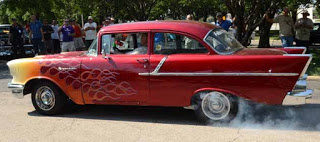
Showing posts with label Drag Racing. Show all posts

Wednesday, August 17, 2016

The Danchuk Tri-Five 2016 Nationals - Event Videos And 2015 Video

The Danchuk Tri-Five 2016 Nationals - Event Videos 

And 2015 Video

Tour with Eileen!


Published on Aug 14, 2016
See the Danchuk Tri Five Nationals riding with Eileen Daniels! Over 2,000 '55, '56, & '57 Chevys at the 2016 Tri Five Nationals in Bowling Green, KY. Beautiful cars, over 16,000 wonderful people from all over America and awesome exhibition runs!

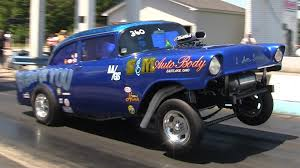
Freels racing first-time shot at the Tri-Five Nationals with 55 Chevy Irish Hill-Billy


Published on Aug 15, 2016
First pass with Irish hillbilly at the 2016 Tri five Nationals Bowling Green

Tri Five Nationals 2016 - Bowling Green, KY


Tri-Five Nationals 2015


!!!Support Texas Classic Experience!!!
Did you like the blog?  If you did, the best way to support Texas Classic Experience is to share this post!  Please tell others that you liked this post by sharing it with your car friends by sending them a link to this page.  http://texasclassicchevyexperience.blogspot.com/

Please use the add link to purchase auto part, books, etc

Don’t forget to visit and like Texas Classic Experience on FaceBook:  LINK to FaceBook
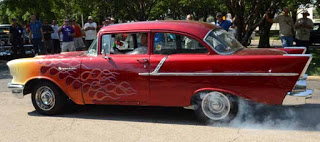
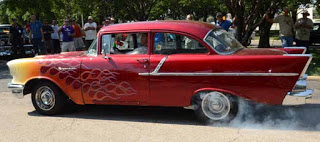
My winning Peel Out at the 2011 Lone Star Classic Convention in Dallas

Texas Classic Chevy Experience will post blogs about: Hot Rods, Chevy, Chevrolet, Drag Racing, Car Shows, Classic Cars, Custom Cars, Muscle Cars, How to Tech. posts, Dallas Area Classic Chevy Club, Texas Muscle Car Challenge, Tri-Five Nationals, Lone Star Chevy Convention, Classic Car lists, Classic car links, Spotters guides, Car Shows, Swap meets, Book reviews and More.

*********************
A Great Tri5 Chat Board
~~~~


Tuesday, August 16, 2016

Questions Answered About Chevy Cylinder Heads and Camshafts


Big Block Chevy With Trick Heads Pulling a Hole Shot


Alan’s 1957 ChevyEngine Building Performance Questions Answered About Chevy Cylinder Heads and CamshaftsIn An One-On-One Bench Racing Session With My Old Friend, Bud Root


-Alan Arnell


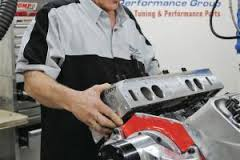
AFR Big Block Chevy 357cc Rectangle Port Magnum Aluminum Cylinder Heads


Alan;  What would be the deciding factor when deciding on the proper-sized intake runners or aftermarket cylinder heads?


BR;  Of course you must take in consideration the cubic-inch displacement of the engine.


Alan; Well then, besides an engine’s cubic inch displacement what other factors should be considered when choosing intake port sizes?


BR;  I got you thinking boy now don't I?  Let me make it hard for you which you know makes me feel superior?  Well then, how you plan to use the mill in your car of choice has to be though of by one and all.  Let’s say we want to put a 540-ci big block in your 1957 Chevy, that will be primarily driven on the street.  With your fat butt behind the wheel she would weigh close to 4,000 pound.  1955. 56 and 57 Chevy I would suggest buying the highest-flowing, largest ported head on the Market.  I built such a car back in 2006 and I choose a 357 Magnum Cylinder Head ‘cause of the engine’s huge displacement.  However, I found out that this set of heads would have run better with as 315cc set.  For that build, that  I did for an old buddy of mine, the idea was to make as much low-end torque as possible, ‘cause he wanted to run a 3.36:1 rear gears.  He is also a lead foot and drove routinely 45 miles to work one way in his hopped-up Triv-Five.  Lucky guy, right!  He wanted to drive his car on the street but still be a street/strip hot rod.  The 315cc head, like I said, in retrospect might have been the better choice.  But, you can’t know everything when you need too now can you, at least not me, but always evaluate what you do so the next time you will do it better.  Anyway, later the same guy wanted a newer setup after exploding his 12 bolt during a street race up by Fogg’s farm. We updated the drivetrain to a narrowed 9 inch Ford axle with at 4:56 gears as he decided to driving his Chrysler Crossfire to work and wanted the ‘55 for mostly Friday night drag racing.  We decided to put in a new set of heads with a 355cc.  


Alan’s Research Notes:  AFR - Airflow Research 3570 - AFR Big Block Chevy 357cc Rectangle Port Magnum Aluminum Cylinder Heads; Big Block Chevy 357cc Rectangle Port 24°
Manufacturer's Part Number:3570, sold as a pair at $3,081.69


Magnum Basic Package Components
100% CNC Ported Combustion Chambers
100% CNC Ported Exhaust Ports
100% CNC Ported Intake Ports
Competition 5-Angle Valve Job
Intake Valve Size - 2.300'' (Valve not included)
Exhaust Valve Size - 1.880'' (Valve not included)
Intake Valve Seats
Exhaust Valve Seats
Bronze Valve Guides


Big Block Chevy 357cc Rectangle Port 24° Magnum Head
Head Torque w/Moly Lube
75 Ft. Lbs.
Rocker Stud Torque
55 Ft. Lbs.
Intake Port Gasket, 1.775'' x 2.500'' with 1/2'' radius
Fel-Pro 375-1275 - DO NOT PORT MATCH Intake Manifold to Fel-Pro Gasket.
Exhaust Port Gasket
AFR 033-6858
Head Gasket Mark IV
4.540'' Bore, Fel Pro 375-1017
AFR 033-6850
Head Gasket Mark V - VI
Up to 4.500'' Bore, Fel Pro 375-1047
Head Gasket Mark V - VI
4.500'' to 4.600'' Bore, Fel Pro375-17049
Head Bolts & Studs
Standard ARP
Head Bolt Washers
Manley Standard
Stud Girdle
AFR 033-6210
Suggested Manifold
Edelbrock 350-2907 & 350-2927 or Brodix 158-HV2000 &158-HV2001
Spark Plug Starting Range
Champion C59C, Autolite 3932
Combustion Chambers
121cc Fully CNC'd
Intake Port Volume
357cc Fully Ported
Exhaust Port Volume
N/A
Spring Pocket can be cut to 1.750, no deeper.
Valve Spacing
Standard
Rocker Arms
Standard
Valve Angle
24° / 4° Intake ; 15° / 4° Exhaust
Angle Mill, 104cc Maximum
.009'' per cc
Flat Mill, As Cast 108cc, CNC 114cc Maximum
.006'' per cc
NOTE:
Flat and Angle mills might require a .120'' thick head gasket.


Alan;  How does compression and cam selection affect the best intake-runner size?


BR;  Well, camshafts and compressing ratios are so important, but camshaft choice plays a slightly larger part in a hot mill.  Let, me explain.  Let say, the ‘55s owner now wanted a strictly dragstrip door-slammer.  The guy wanted to keep running pump gas in a 11:1 somewhat street-friendly car.  He was running a .714-inch-lift solid mechanical roller which, you might know, is fairly aggressive. When push comes to shove, that cam will barely push the valve up to .700-inch lift after valve lash and deflection of valvetrain parts.  You gotta figure, .680 is more realistic.  So, in reality the flow data of the 335cc against the 357cc, you would clearly see that there ain’t much difference between the two until you start lifting the valves past .700. Now that’s not a problem even our race ‘55.  You see, all the larger head would have accomplished would have been a been a reduction in the overall airspeed ‘cause of the larger port and would have not made any additional volume of air.  You would find that, the valve lifted high enough to best use the benefits of the larger head.  I betcha, you would have a loss of low-end torque and have a wash, at best, when it comes to the actual peak power.  I have found that, such an engine would be lazier when driven at part-throttle.  You don’t want that!  No less, the fuel milage would go to shit, That rich bastard who owns the ‘55 would not care, but I would and I stand by my engines.  Maybe worse, the larger head would have wanted to run best at a higher rpm, which is no good for the camshaft we chose for the 11:1 street engine.  I say, take the exact same package and add two to three full points of compression, a cam with another 20 degrees of duration at .050 and a gross valve lift of .800 and that 540ci mill would be a G.. D..., F’en monster at 7,500 rpm’s with those 357 Magnum heads.  Anyway, that is what I think would be the best choice for this car.  


Alan;  When upgrading to aftermarket cylinder heads, how does overall flow affect camshaft selection?


BR;  That is a very important thing to consider, as the engine’s flow characteristic and valve timing are the two main things to get right for a fast car.  The two must be matched to make that power we all look for to have the fastest car.  Most people think that better-flowing head actually require less valve timing or shorter duration cams for a given rpm than a lower flow heads, but they’d be wrong.  That’s, ‘cause the better-flowing head can fill the cylinder faster, that is given the same signal from the piston than the less flowing heads.  I learned, that heads with high-flow ports are typically used only in high-rpm setups, they are typically used with relatively long duration cams.  Now, if you need to run the same rpm with a head that flows less, even more duration will be require.  So, on your street car with good heads, surprisingly little duration is needed to make the best horse power at say, 5,600 to 6,500-rpm.  A 350 mill with  250-plus-cfm head should make peak power in that range with a cam as small as 224- to 236-degrees at .050-inch to make great power that high.  One of the biggest myths about cam selection is that people think that big heads need a big cam.


Alan;  With high-flow aftermarket heads, how important is the intake versus exhaust flow ratio?


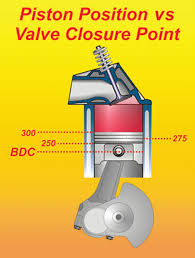
BR;  In the same way the exhaust-to-intake flow percentage does play a role in the camshaft choice.  To make this percentage right at a given lift, simply divide the exhaust flow by the intake flow and multiply by 100.  For example, a 250-cfm intake port and a 180-cfm exhaust port give a 72-percent flow number (180/250x100=.72)  As a engine builder, I shoot for about 72- to 75-percent flow for peak power.  A cylinder head in this range usually needs about six degrees more exhaust duration than intake duration to perform best between peak torque and peak power.  You see, the exhaust flow gets to 80 percent of the intake, the best cam selection should have about the same exhaust and intake duration  Likewise, heads that flowing the high 60s need more than 10 degrees extra exhaust-to-intake duration. As always, there is always an exception.  That’s when the combination needs to spend a substantial amount of time above peak power.  In that case the pumping losses happen while trying to push out the exhaust can hurt your horsepower output.  When that happens, as I have done for stock car racers’ engines,  I usually widen the separation and increase the exhaust duration that opens the exhaust valve earlier to allow more exhaust gas to escape near bottom dead center as the piston has to push it out.  This happens a lot in your larger-ci motors, due to high piston speeds and lower peak-power rpms.


Alan;   Since most aftermarket heads can handle much more valve lift, how does that affect the choice of the net lobe lift?


BR;  Many of your trick heads don’t flow much more than the older heads I used back in the day. They range in the .100-inch to .300-inch valve-lift range.  Mostly, your trick heads more than likely take off above .300-inch valve lift, The older heads were made to around about .4-inch valve lift, so most of the work was done over time to improve low-lift flow.  Many new street valve-springs can handle lift above .600-inch, and some of the best endurance race springs will run over .800-inch valve lift for more than 500 miles of hard use.  Many a good drag racer engine builder is almost getting 1 ¼- lift, some even more!  With the additional lift available, two-valve cylinder heads can make great flow improvements at these higher lifts.  However, both the cam and the head must be made to work together in the higher range.  


Alan;  How do you make a selection differ with forced-induction applications running high-flow heads?


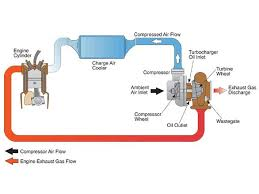
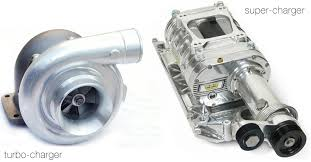
BR;  Using a turbo or a blower, can change the cam choice ‘cause of the forced pressure differences across chamber.  With a blower I have to consider that too much overlap forcing the intake charge through the chamber and out the exhaust.  So, I typically widen the lobe separation.  You could also go with an earlier exhaust opening to run at a higher rpm.  On turbos you must pay close attention to the boost versus the backpressure to figger’ out overlap.  On older systems, the backpressure was very high and overlap would result in a bad reversion problems.  In later systems, pressures are much more constant across the chamber and cams are closer to those run in non aspirated setups, except, and there is always an exception.  Heads act much better with the dense charge, so duration can be much smaller for the same rpm.  The ricer’ guys with the four-valve motors typically need less overall lift due to the simaller valve diameters, greater curtain areas and increased lift-to-diameter ratios.


Alan;  There are so many variables to think of when picking out a cam.  Does it not make sense for the engine builder to just call COMP Cams for advice before buying a new cam?


BR;  Of course you could.  When you do, make sure you go over the details of the build before buying a cam.  Let me see,  I believe I have Comp Cams’ help line number here somewhere, here it is, 1-800-999-0853  I have found they are very good at helping you select a camshaft that best fits what you want the mill in you car to do for you.


BR;  Let me ask you this?  Are you following any of this at all?


Alan;  It’s a lot to think of, but if I ever get build my dream engine I will know more than I did yesterday.

A Great Tri5 Chat Board

~~~~


!!!Support Texas Classic Experience!!!
Did you like the blog?  If you did, the best way to support Texas Classic Experience is to share this post!  Please tell others that you liked this post by sharing it with your car friends by sending them a link to this page.  http://texasclassicchevyexperience.blogspot.com/


Don’t forget to visit and like Texas Classic Experience on FaceBook:  LINK to FaceBook
My winning Peel Out at the 2011 Lone Star Classic Convention in Dallas


Texas Classic Chevy Experience will post blogs about: Hot Rods, Chevy, Chevrolet, Drag Racing, Car Shows, Classic Cars, Custom Cars, Muscle Cars, How to Tech. posts, Dallas Area Classic Chevy Club, Texas Muscle Car Challenge, Tri-Five Nationals, Lone Star Chevy Convention, Classic Car lists, Classic car links, Spotters guides, Car Shows, Swap meets, Book reviews and More.


Thursday, July 21, 2016

Shirley Muldowney Has Health Scare

Shirley Muldowney

Has Health Scare, But is Okay!

The Movie Heart Like a Wheel &

Life and Times of the First Lady

of Drag Racing


-Alan Arnell

Shirley Muldowney is on the road to recovery after tumors found in her lung were revealed to not be cancerous.

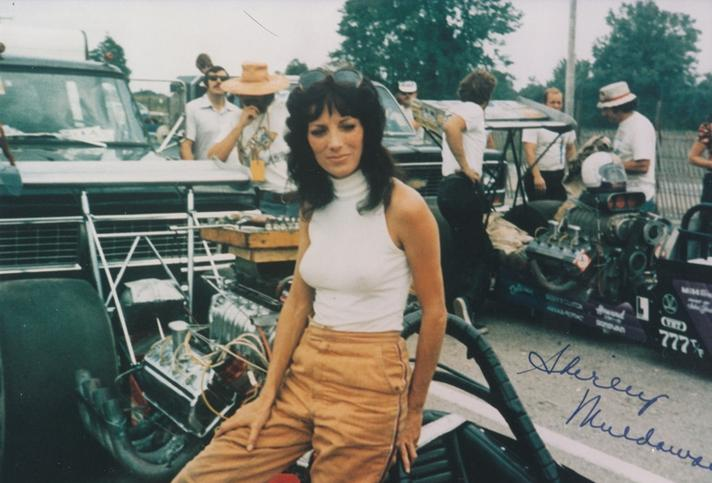
Shirley Muldowney
Shirley Muldowney who is a multiple NHRA Top Fuel champion had a bump in the quarter mile of her life when tests revealed she had tumors in her lungis.  Thankfully, Shirley is now on the road to a full recovery after surgery where doctors found the tumors were not cancerous.


Muldowney was discharged from the Novant Health Presbyterian Medical Center in Charlotte, NC., on May 31, and is now convalescing at home.


Muldowney's May 25 surgery lasted five hours and, initially, thoracic and cardiac surgeon Dr. Harold Howe planned to remove her right lung, but upon closer inspection removed instead the upper and lower lobes of her right lung and lymph nodes.


Muldowney, who has bravely stood up to chauvinistic men during her storied career and made her way back from a devastating crash in 1984, admitted the initial prognosis and surgery made her more frightened than ever. However, her doctor’s good news of no cancer was, as we all can imagine, well received.


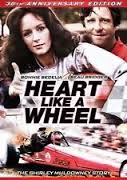
The Movie Heart Like a Wheel


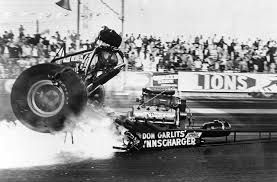
Back in the day of only three channels to watch on TV and most households only having one TV it was fairly easy to miss out on important milestones in the timeline of popular events.   My knowledge of dragracing consisted of what I was able to watch on the Wild World of Sports.  I knew of “Big Daddy” Don Garlits, because I had watched his car explode on a Sunday show of Wild World of Sports.  


In 1970, Garlits was driving Swamp Rat XIII, also called the Wynnscharger, a front-engined slingshot rail, when the vehicle suffered a catastrophic failure. The two-speed transmission Garlits was developing exploded and took a piece out of his right foot.


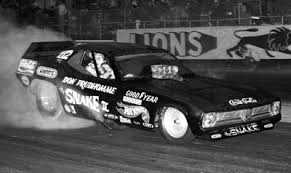
And. “The Snake” Don Prudohmme who was racing his Funny Car and winning multiple championship during my youth and was, it seamed, alway on the TV programs I was able to watch.  Besides those two great racers, I was clueless to drag racing.  


In 1982, I was introduced to Shirley Muldowney when I saw the movie “Heart Like a Wheel”  The movie was a compromise move with my wife, as it was about drag racing, which I like and a woman’s fight against the world of a men’s sport, which like the Lifetime Channel the joy of my wife.  
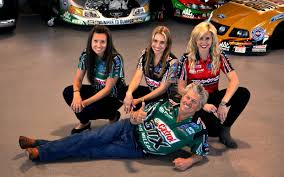

John Force and his three racing daughters.
Ashley Force, Britney Force and Courtney Force

Today, the Force girls may be leading the current pack of women drag racers, but it is, in my mind’s eye, doubtful any of them will surpass the importance to the sport of Shirley Muldowney.  Other females had success during the same time of Shirley’s racing fame, but Muldowney was the first to have a Fuel license and the first to score a pro-class event win.  With multiple championships and national wins, Shirley Muldowney’s accomplishments can not be viewed on a scale of achievements by women, but by in the contest of one of the greatest pure drag racers of all time.


Nevertheless, her gender brought nationwide attention and as, I mentioned earlier, a  film was made of her life story in the1983 entitled, Heart Like a Wheel.  The movie was released on DVD in 2006.  


Actress Bonnie Bedelia, portrayed Shirley in the film.  The move was a shot in the arm for Shirley’s PR, if not just for me, as it raised interest Shirley and Drag Racing in the American Public as a whole.  Needless to say, The move was a great view into the sport of drag racing as well as Shirley.  


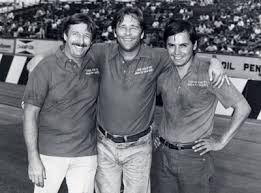
Marvin Graham, left, next to actor Beau Bridges during the filming of the Movie


Other racers involved in the movie were Top Fuel’s Marvin Graham, a tech adviser who also starred as Connie Kalitta’s crew chief and stunt drivers Kelly brown, the 1978 Top Fuel champion and the the legendary TV Tommy Ivo who, along with Don Garlits and Connie Kalitta, had signed off on Shirley’s Fuel License in 1972.


Shirley was also the subject of a documentary on the Biography Channel.  See more at https://www.muldowney.com/


A Brief Summary of Shirley Muldowney’s Life and Career


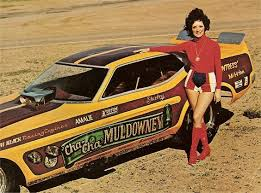
Shirley Muldowney (born June 19, 1940 in Burlington, Vermont, also known professionally as "Cha Cha" and the "First Lady of Drag Racing".  She is an American auto racer and was the first woman to receive a license from the National Hot Rod Association (NHRA) to drive a Top Fuel dragster. She won the NHRA Top Fuel championship in 1977, 1980, and 1982, becoming the first person to win two and three Top Fuel titles. She won a total of 18 NHRA national events


Early Life


Shirley Muldowney


Shirley Muldowney was born Shirley Roque on June 19, 1940 in Burlington, Vermont, to Belgium Benedict and Mae Roque. The family moved to Schenectady, New York, where Shirley grew up with her older sister. Their mother worked as a laundress and father as a cab driver. Belgium was also a boxer, and is credited as instilling a sense of toughness in his petite daughter.


Shirley fell for avid car racer Jack Muldowney and married him at age 16, dropping out of high school; after two years, they had a son, John. Shirley soon found herself taking to the racing scene as well, learning to drive from her husband and then entering matches in her area. With Jack working on car upgrades that would allow for higher speed, Shirley honed her skills as a competitor in a male-dominated field.


Racing Career and Championships


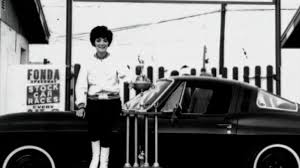
In 1965, Shirley Muldowney became the first woman to receive a license from the National Hot Rod Association to drag race professionally, after forming a coalition with other women racers that included Judi Boertman and Della Woods. By the early 1970s, Muldowney was a no-nonsense contender in "funny car" races (so named because the vehicles are designed radically different from conventional cars for racing purposes), and was able to reach speeds of more than 200 mph, making the finals of the NHRA Nationals in 1971. She and Jack divorced, and she moved to Michigan to be more in the mix of the sport.


By the mid-'70s, Muldowney had won the NHRA Spring Nationals, becoming the first woman to do so, and went on to become the first person ever to win the association's World Fuel Championships on three separate occasions—in 1977, 1980 and 1982. She would go on to win 18 NHRA titles in total, dominating world championships and setting various records. Muldowney had become a multi-pronged trailblazer.


Muldowney's success was all the more poignant considering the sexism found in racing culture, with Muldowney having more difficulty than male drivers attracting sponsors and finding a crew. Her success also defied traditional gender stereotypes, as she was a top racer who loved high heels and would paint her cars hot pink, both as something she enjoyed to do and to get under the skin of hecklers. She became a fan favorite of both women and men alike.


Connie Kalitta


Muldowney's son eventually came to work as part of his mother's crew during his adolescence, and she entered into a personal and professional relationship during the '70s with racer and car-builder Connie Kalitta. The two would sometimes race together, and Muldowney was given the nickname "Cha Cha." (She would later state that she never cared for the moniker.)


Major Accident and Comeback
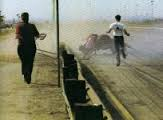


Shirley's horrific crash.


In 1984, Muldowney experienced a near-fatal crash in Montreal when her vehicle spun out of control for 600 feet due to a wheel malfunction. Her legs were shattered; her hands, pelvis and several fingers were broken. Dirt and debris had to be removed from her body for hours before doctors could operate, and then she had a long, terribly painful rehabilitation process at her home in Mt. Clemens, Michigan. Thousands of fan letters poured in, and she resolved to return to racing. She made her comeback in 1986, winning another NHRA Nationals title in 1989. The accident also spurred the design of safer vehicles with reconfigured wheels.


Muldowney decided to retire in 2003, partly to alleviate the workload of her husband and crew chief, Rahn Tobler, whom she married in 1988. (The two split in 2006.)


Shirley Muldowney’s Tales From the Track, release in 2005
Muldowney later wrote the memoir, Shirley Muldowney’s Tales From the Track, release in 2005. She has earned a slew of awards and accolades as well, including being inducted into the International Drag Racing Hall of Fame and receiving an "Outstanding Achievement Award" from the U.S. House of Representatives.


Muldowney, who is retired from active competition, still attends the NHRA Mello Yello Drag Racing Series as an ambassador of goodwill though her Shirley's Kids program, a 501charity.


Shirley's Kids
Shirley's Kids provides funds to select children who may be struggling with medical issues or financial hardships brought on by a personal or family tragedy.


Muldowney, per her Twitter account, anticipates a return to the drag races in July when the 24-event NHRA tour rolls into Bandimere Speedway located outside of Denver.
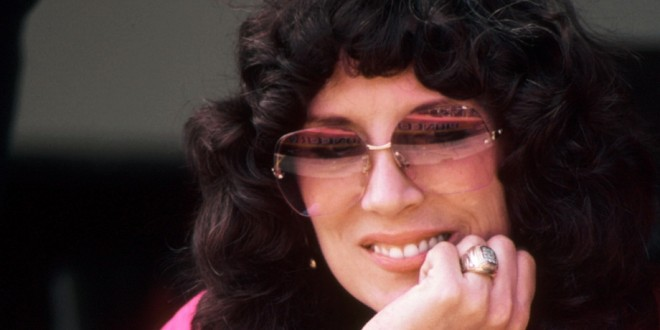

Shirley at the height of her fame wearing her Championship ring.


!!!Support Texas Classic Experience!!!
Did you like the blog?  If you did, the best way to support Texas Classic Experience is to share this post!  Please tell others that you liked this post by sharing it with your car friends by sending them a link to this page.  http://texasclassicchevyexperience.blogspot.com/


Don’t forget to visit and like Texas Classic Experience on FaceBook:  LINK to FaceBook
My winning Peel Out at the 2011 Lone Star Classic Convention in Dallas


Texas Classic Chevy Experience will post blogs about: Hot Rods, Chevy, Chevrolet, Drag Racing, Car Shows, Classic Cars, Custom Cars, Muscle Cars, How to Tech. posts, Dallas Area Classic Chevy Club, Texas Muscle Car Challenge, Tri-Five Nationals, Lone Star Chevy Convention, Classic Car lists, Classic car links, Spotters guides, Car Shows, Swap meets, Book reviews and More.