Showing posts with label Baby Boomers. Show all posts

Tuesday, October 4, 2016

Alan Arnell’s Classic Chevy-Classic Auto Biography

Alan Arnell’s

Classic Chevy-Classic Auto Biography


-Alan Arnell
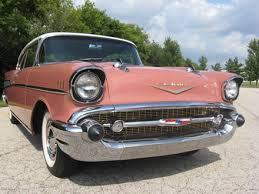

1957 Chevy Bel Air 4-door hard-top painted in Canyon Coral & India Ivory


I became interested in Hot Rods as they were called and not old enough yet to be considered classic cars, because they were just cars in 1965. Classic Car at that time were cars made before World War II, such as the '40 Ford Coupe and the '32 Deuce Coupe.

I was 7 years old in 1965.  My mother had a wonderful 1957 Chevy Bel Air 4-door hard-top painted in Canyon Coral & India Ivory with an interior color of black and silver, that I just loved. I wanted my own car to hot rod since that time.  That ideas has been the forefront of my mind to this day.  This reoccurring theme stayed true my whole life despite the changes and personas a man has to live through during his life in Middle America.  
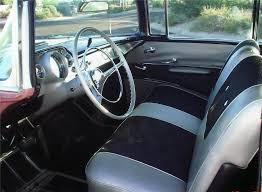

Interior Color of Black and Silver


I lived during my formative years in the late 60’s and late 70’s I lived the Mid-West, watered down version, of the 1950’s Greaser life in a suburb of Peoria, Illinois (called the Lanes) with a little flower power and anti establishment thrown into the mix and without the greasy hair.  Yes, we were always a little behind the times in the Lanes, than the the more trendy and influential parts of the USA. We more or less lived the '50s twice. (a reference to the movie Field of Dreams) Nevertheless, even in the Lanes we knew the wet head was dead!  
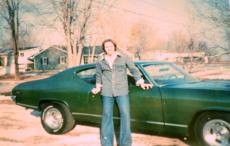

7851_USER_PROFILE__230x230.jpg
Me in 1976 with my 69 Chevelle


You might already know that Greasers are a working class youth subculture that was popularized in the late 1940s and 1950s by middle and lower class teenagers in the United States. Hot Rod Cars, Rock and roll music, and rockabilly, were major parts of the culture, and styles were influenced by singers like Elvis Presley, Carl Perkins, Chuck Berry, Little Richard, Bo Diddley, Eddie Cochran, Gene Vincent, Johnny Burnette, Vince Taylor and Ritchie Valens, but the two main figures of the look were Marlon Brando and James Dean. In the 1950s and 1960s, these youths were also known as "hoods," as in "hoodlums." This may be because the style was more popular in poor neighborhoods that had higher crime rates than upper-class neighborhoods.
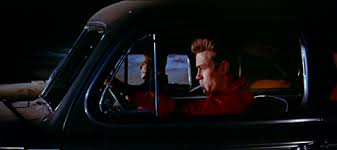

James Dean in the movie “Rebel Without a Cause”


In the 1950's, Hollywood film characters portrayed by actors such as Marlon Brando and James Dean influenced American greaser culture. American youths were looking for entertainment and identity following the war-hero image of the World War II generation. The 1950's was a boring time for many of America's youths, and the greaser became an individualistic iconic image as a role model to escape boredom. The subculture also featured deviant social behavior influenced by the way films portrayed greasers.  Dean represented greaser culture in the 1955 film Rebel Without a Cause, in which his character is an outcast trying to fit in with his peers while wearing a red windbreaker jacket. This reinforced the notion of individualism even within the social boundaries of greaser culture. Dean epitomized youths' search for identity during the 1950s. Dean's untimely and reckless death made the leather jacket that he frequently wore, even more symbolic of the rebellious greaser seeking adventure.


Individualism or hoodlumism?
The Tri-Five Chevy played a great roll in my emerging love of fast hot rod cars.  In 1965 you could buy a 55 for $200 and spend $50 a week made from you part time job, pumping gas for example, and with your buddies in your dad’s garage in a couple months time have a cool life changing car at your disposal.  For nearly all of the first century of automobile travel, getting your license meant liberation from parental control, a passport to the open road.  


Make it or Break it, Find it or Grind it, Fix your own crap man!


Cars of the late ‘50’s and early 60’s were not as reliable as autos of today.  Teens had to work on their cars and therefore had a intimate connection to the mechanics of the vehicle.  My friend Carl spent so much time bent over his 1962 Chevy II, I thought he would be permanently bent over that way for the rest of his life.  I tore out so many transmissions in my 1969 Malibu-Chevelle that my best friend Ron used to say,  “I believe we will find Alan a sleep under that car some morning.”
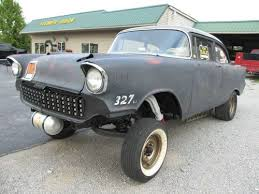


Too Cool for School!

Some-what like army buddies in a fox hole, working and maintaining hot rod was a bonding activity. Therefore, adversary and strife as well as over overcoming that hardships builds a pride and friendship that is rarely matched by less stressful experiences.  Thus, was the heap of crap most of us drove, at least where I grew up.  We did not buy a car for reliability and transportation.  No, we bought a car for the potential of making a self customized-hot rod that was an expression of your own personal character that was eagerly perceived by others in your age group.
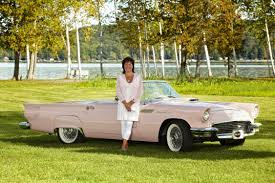

Rich kids-Bogus-Bad Vibes.


Oh! We had rich kids who’s parents bought them the brand new Thunderbird.  Yet, they were looked down upon by their peers as not as cool, because they did not build their personal chariot by themselves. If you could build an engine that was faster than the next guy, or paint a custom paint job in your garage you were looked upon as a man among men.  


I read an article in the Washington Post that quotes Matt Crawford, a political philosopher at the University of Virginia’s Institute for Advanced Studies in Culture who also fabricates components for custom motorcycles.  He said:


“Digital enticements are displacing the pleasures of driving,  So that whole sense of getting in the car and finding out what’s beyond the next town is less powerful.”


Crawford, 49, fell in love with cars back when drivers often had to deal with mechanical problems. His first few cars were “real beaters” that broke down frequently, requiring him to bang on a stranger’s door and beg for help. “You’d end up interacting with people you wouldn’t otherwise meet,” he says. And knowing your car paid dividends. Braking was a skill. Parking did not involve cameras or computers.


Now, he says, “cars have become virtual reality boxes,” infantilizing the driver. BMW even pipes phony engine noises through its cars’ sound systems to make drivers feel like they’re in charge of a machine that mostly runs itself. Driving these days, Crawford writes, “would seem to promote a kind of regression — back into the womb.”


Maybe car culture is waning, he suggests, because “parents are less authoritarian and want to be your friend.” In other words, the need to rebel isn’t what it used to be."

~A Strong web 1.jpg
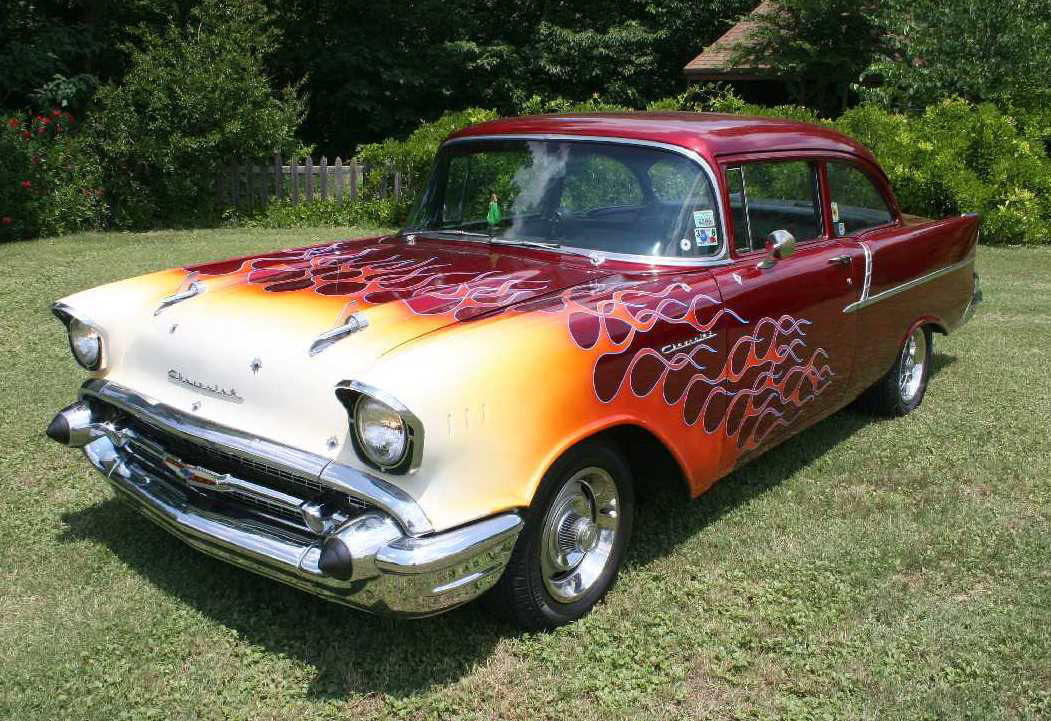
Candy the Apple 1957 Chevy-AKA The Hell Bitch
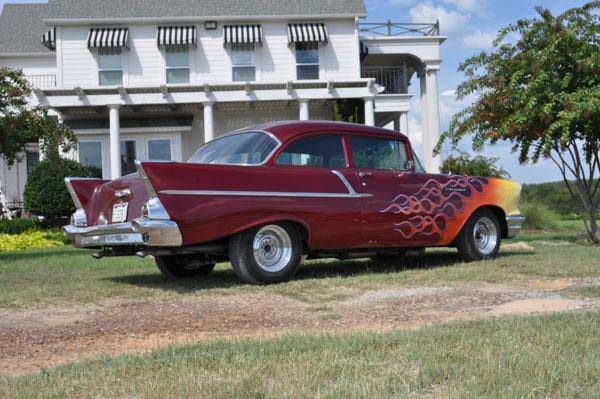
I shall now segway into my Hot Rod autobiography.  Instead of rewriting the same thing over again, I wish to use what I wrote when my Hod Rodded, candy apple red, with painted flames, 1957 Chevy 150 2-door sedan was featured on  www.dallasclassicchevy.com the Dallas Area Classic Chevy’s home Web Page.


I, like many other car enthusiasts, have always remembered which cars made us excited and car crazy during childhood.  As you can guess, the start of my obsession with cars began with a 1957 Chevy.  I grew up in a coral pink, 4 door hardtop 1957 Chevrolet Bel Air that my parents had from 1958 to 1972.



I can remember being 5 years old and saying “Put it into passing gear, Mama!”  She would floor it and kick in the 4-barrel.  To make it even better, we lived in Illinois where rust is a real problem, especially with the exhaust system.  My Dad, a product of growing up during the Depression-era, would buy the least expensive mufflers, which were called, in those days, “Glasspacks”, which made the 283’s roar a very pleasing tune to my ears.  Sadly, even though there was no body rust and the car looked brand new, my father sold it when I was 14 for $150 to buy a truck camper.  Back then, in his view, it was just an old car.


When I became interested in cars in 1963, there were several kids that were 10 or more years older than me in the neighborhood that were Hot Rodding '57 Chevys. I used to watch them tearing around the neighborhood in their '57’s with reverse chrome wheels and no front bumper.  I was so enamored I even made a plastic model of what my '57 would look like if I had one.  Of course it had no front bumper, was painted yellow, with an off centered racing stripe and multiple “STP” and Moon stickers. Forty two years later, I still have that model.

';lkjhy.JPG
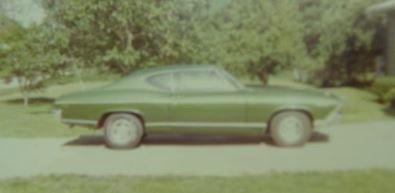
My first car and hot rod I fixed up, a 1969 Chevelle-Malibu 


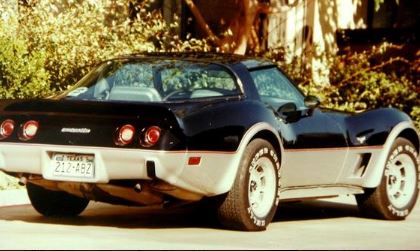
By the time I turned 16 in 1974, most of the Tri-Fives in Illinois were pretty much rusted hulks.  So I purchased a 1969 Chevelle.  I drove the Chevelle throughout high school and college.  When I was 25 in 1983, I went the Corvette route buying a 1978 pace car.  I owned the Vette until 1988 when my first child was born.

nnndsnsn.JPG
My 1978 Corvette Pace Car


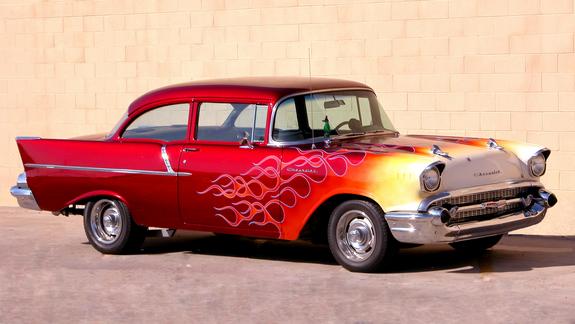
Fast forward to 2000 and once again that strong desire to have a hot rod came over me.  I didn’t want to ride the same path again with a muscle car or a Vette so, I set my sights on my first car love and lust, a 1957 Chevy.  When I started looking for a '57, of course I wanted a Bel Air hardtop coupe.  I looked in magazines and the newspapers and had no success with that search.  As luck would have it, in The Colony, Texas where I live there is a classic auto dealer called Pat’s Auto Sales.  I had been going there for years just to look at the cars, as if it were my own little car show.  One night I found a dark blue 2 door Bel Air hardtop.  I thought about it for a couple of weeks and when I decided to buy the car it had a sold sign on it.  Well, I moped around for a day or so and called Pat and said, “If for some reason the sale on the blue '57 doesn’t go through, give me a call because I’m interested.”  Pat replied, “I am getting in a yellow and orange flamed candy apple red 57 today for a trade in so why don’t you come on down and have a look?”  Candy apple red, I thought, “I’ve always wanted a candy apple red car.”

5115180108_large.jpg
1957 Chevy 150 2-door Sedan


I went down to have a look and when I arrived at the car lot I immediately liked the flames and the red paint, but it was a post sedan and then I blurted, “What is wrong with the side of that thing?”  Pat told me, “This car is a One-Fifty.  She doesn’t have the stainless diamonds on the side like the Bel Air or the painted diamonds like the 210.  The chrome trim on the side looks somewhat like a 55 Chevy 210.”

~~~small Hell bitch.jpg


I had never seen a car like that before and a One-Fifty was not what I wanted.  Even though I went for a test drive and even liked the look of the car’s paint, I passed on buying that day.  So, you could say it was not love at first sight.  I went home that night with the intention of continuing my search but I started thinking. I love the flames. I love the candy apple red paint. I love the price. And do I really need a Bel Air?  With that much needed spark and my wife’s two cents, “Oh, I like that red car much better than the blue one!” the car started growing on me more and more to the point that the next day I went back to Pat’s and plopped down my money and drove her home.


I didn’t do any restoration work on her for a year or more. I just wanted to enjoy driving her every chance I got.

Here is a link to my Dallas Classic Chevy Club Featured Car.

Now in July, 2016 my main thoughts have not really changed since was that toe-headed 7 year old boy in the Lanes in 1965.  Even after getting more educational degrees than a thermometer and more chins than a Chinese laundry establishment, 36 years of marriage, raising 2 children, 35 years working in public education, I still want the same basic things for my hobbies. Guitars and Hot Rod Cars!   To quote Billy Gibbons Rock of the famous rock band ZZ Top, “Everyone knows cars and guitars go together like tortilla chips and guacamole.”  I like chips and that green slime is sooo goooooood!


!!!Support Texas Classic Experience!!!
Did you like the blog?  If you did, the best way to support Texas Classic Experience is to share this post!  Please tell others that you liked this post by sharing it with your car friends by sending them a link to this page.  http://texasclassicchevyexperience.blogspot.com/

Don’t forget to visit and like Texas Classic Experience on FaceBook:  LINK to FaceBook
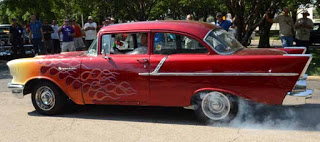
My winning Peel Out at the 2011 Lone Star Classic Convention in Dallas

Texas Classic Chevy Experience will post blogs about: Hot Rods, Chevy, Chevrolet, Drag Racing, Car Shows, Classic Cars, Custom Cars, Muscle Cars, How to Tech. posts, Dallas Area Classic Chevy Club, Texas Muscle Car Challenge, Tri-Five Nationals, Lone Star Chevy Convention, Classic Car lists, Classic car links, Spotters guides, Car Shows, Swap meets, Book reviews and More.

*********************
A Great Tri5 Chat Board

Slammin’


Sunday, May 15, 2016

Will the Classic Car Craze Fade Away With the Baby Boomer Generation?

IMG_8561.jpg
Will the Classic Car Craze Fade Away With the Baby Boomer Generation?
-Alan Arnell

The topic of the future of the car hobby usually comes up when ever car guys get together.   The type of guys who just like to open the door to their garage to just look lovingly at their car/s, muse over what they fear will happen in a few years.  Many believe that the over time the most desirable collector cars will become available as Baby Boomers leave the hobby either by their own decision or because their time has ended.  The booming sales at the Mecum Auctions have  pointed out to those who will listen as an tell tail sign. Even the casual viewer of the TV auction show notices that entire collections are on the block with increasing numbers..

Still, many believe it is a little early for the boomers (oldest group is 71, younger ones are about to reach 55) to be checking out of the auto hobby in mass. Give it ten more years for the post war babies, and 20 more for the late 1950's and 1960's kids.  Of course, some baby boomers are dying, and so are some 13 year olds and 22 year olds. But as of today Baby Boomers are still hanging in there.  The generation that is sadly coming to an end are great people born in the 1920's, and working on the 1930's.


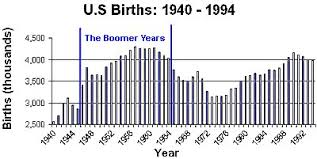
Baby boomers are people born during the demographic post–World War II baby boom approximately between the years 1946 and 1964. This includes people who are between 52 and 70 years old in 2016. According to the U.S. Census Bureau, the term "baby boomer" is also used in a cultural context.

It is quite evident that in this part of the 21st century that the average car collector is a part of an older demographic. People select a car they have some attachment to when they collect. Tri-Five Chevys for example are from the late 50s. They appeal to people from that time up until the mid 60s. One would think that at least the crash of the collector cars still left should not happen for another 30 years or so before the loss of people that have had first hand memories of Tri-Five Chevys as contemporary cars.

Invariably in a discussing the fate of the classic cars someone will ask the group how the present car guys could activate a young audience.  There is always that guy that will chime in with something to the effect of, “Tell ’em to go buy a used car and start working on it, like I did.” That brief exchange speaks volumes about the collector car industry right now: There are no cheap cars available to the common youth to work on and today’s cars more than likely would benefit better from buying a computer than a ratchet to have the most effective tool for hot rodding.

Sixteen years into the 21st century everyone that plays or works within the collector car hobby can plainly see a  “graying of the hobby.” While gray hair is certainly nothing to be ashamed of as many of us chrome domes wish we had more of it to comb. None the less, as we slap on the Rogaine our minds invariably wander to what may happen to the classic car hobby if the younger generations are not drawn to the cars we love.  But why do so many worry about the passing of the torch and why does anyone really care? I wonder?  It can’t all be about the money, can it?

IMG_8549.jpg

Psychologist write that a person’s hobbies may reflect their inner most desires, help them fulfill their unmet needs and make them feel special.  Some people start to collect stuff because they are too attached to the past. This usually happens with people who prefer their past over their present. The hobby of collecting stuff allows people to ease the insecurities that arise when good things get taken from them. It is as if they are locking their good memories in a cupboard in order to protect them from being taken away.  Whatever!  All people, without exception, have unmet needs however not all of them try to satisfy these unmet needs.  

But then, people who blame others, act like victims or have external losses of control are less likely to develop any hobbies even if they have certain important needs.  I’ll take that as a complement.  Us car guys must be pretty much together people to put so much time and effort to the hobby.

Getting back to bringing in new younger people into the car hobby.  Truth be told, it seems many of the old gray hairs only give our young souls out there little more than a passing glance.  Then they wonder why nobody stops by to pick up a wrench, or show interest in what might happen to the collection they’ve invested so much sweat and equity into after they’re gone.

If we want young or even additional members to join the car hobby, of course there is promotions and fun activities.  However, you might want to maybe pay them some attention if they show interest.  Get out of you clicks of people you know.  If you want young people involved, talk to them, invite them to a car show, help them work on their car they have, ect.  Interaction is the way to go.  The car hobby is so cool, who would not want to tag along to a classic car event.  

I was born near the end of the Baby Boomers dates of birth.   I am old enough to have children that are  23 and 28 years old.  I have daughters who really don’t like customized or old cars.  Now they would drive a sports car in a minute if they could afford one. So, by my inviting them to my car club events must have worked, maybe a little?

Many young men today are not into hot rodding cars as guys were in my age group.  The most I have seen out of them is driving a lowered Honda with the bolt-on muffler and chrome tip courtesy of the accessories aisle at Pep Boys.  But, then what choice do they have?  Don’t exclude or make fun of them because they are sake jockeys.  They are the future buying market for you when you long classic car ride is done.  Now if they are playing loud Rap music, well, I can’t defend that!

I want to Hear You Scream---Play Some Rap Music


The trend for the new kids and old kids these days is the “Youth Mode” generation: We don’t identify with what’s generally accepted as the standards of our actual age, as much as we identify with the cultural movements we value.

When my dad was 44, he was considered middle-aged  He was halfway through the mortgage on the house, had a few cars in the driveway and was just starting to think about what he was going to do in 20 years when he was ready to retire from the school district, that he had dedicated his life.

When I was 44, I was still wearing the same brand of sneakers I wore 20 years ago, which also happened to be the same shoe the kid down the street with the skateboard was wearing. We both wore them for the same cultural statement they made. That’s an example of living in Youth Mode: simultaneously respecting the responsibilities of middle-age and the energetic power of youth.

So, here we are at this crucial point in the collector car continuum: The originators are a quickly-diminishing group, and the newest members don’t seem to realize they’re losing a valuable resource and knowledge base. They are creating their own interpretation of what the Old Guys created for them so many years ago.


What does that look like in the real world? Well, it means that important, private car collections are being auctioned off instead of being passed to the next generations to privately curate. It also means that a beautiful tradition of the mastery of the mechanical world is quickly being lost. It means that kids find more value in experiences than pride of ownership.  They’re more inclined to use their smartphones to organize and attend a giant party at the beach then figure out how to buy and restore a classic car that could literally and figuratively become the vehicle for such a great experiences.

But I contend that all is not lost. I believe that car guys in the middle of the age spectrum need to  become the bridge between two ends of the collector car spectrum that, for a host of reasons, that don’t talk to each other.

It is not gonna be easy to get them both in the same room at the same time, but as the living bridge, it’s up to my generation to actively participate as storyteller, ambassador, cultural attaché, archivist, creator, curator and mentor. In the future, will the last remaining Hispano-Suizas and Iso Grifos of the world be relegated to museums like Fabergé eggs?

One of the major defining aspects of a burgeoning Gen-X and Gen-Y-as-collectors movement is the practice of tying a car’s value directly to its representation of a cultural movement.


There’s a real renaissance right now among youth culture and it’s called “Maker.” You’ve probably heard the term. Chrysler is even used the reality to endear the valuable 20-something consumer base to their retooled 200 model in corporate TV spots.  Making things defines the term “Hack,” too.

Make or Hack, it really boils down to the central theme of modifying and/or building something to fit one’s personal tastes and values. And whether it’s website code, a motherboard, a can of paint and a bare wall, a vintage Puch moped, a pair of jeans, a Stromberg carburetor or a ’29 Model A roadster, the value for Gen-Xs and Gen-Ys comes in the experience those physical things help produce.

As long as we can foster their participation in the collector car world on their terms, the DNA of the industry's way of life will never be threatened.

If you are old enough and have been involved with collecting cars for decades you are undoubtedly concerned with many of the points made in this blog,  Everyone wishes to have a crystal ball to look into the future to know which cars will be of interest, will people sell off their car collection making the bottom fall out of the market.  No one wants to buy high then sell low!.

25 years ago the majority of the auctions and museums were classics, pre 40's cars.  If you were talking to a 40 year old in 1960 he was looking at a Model A.  If you were talking to a 50 year old in 1970 he was looking at a 57 Chevy.  If you were talking to a 60 year old in 1980 he was selling his car to pay the inflation price of 14% on houses.


Today there are valid concerns with the upcoming buyer’s attitude of not needing a car.  Many have the attitude that they will move to the city and instead of driving a car they plan to use mass transit. The baby boomer generation was an anomaly in the birth rate and the Millennials will be a large group as well.  But still, it is easy to understand that the the pool of new up and coming potential classic car buyers will get smaller in the future.  There maybe even be smaller numbers of new adults that can drive a car, let alone, know how to fix a car and even want one!  Today’s, school systems with core learning test are making little attempt to foster Career and Technical curriculum. Today, public schools are geared towards putting students on the college track and not the so called blue collar track.


Still, it is a proven fact that the future will belong to those that can fix things and those that can sell things!   The lack of training for repair people is a direct result of the fact that most consumers are not prompted to take stuff apart.  Marketing for reason of increased profits and convenience have made items we need  disposable.  There will still be mechanics and sales people.  Not everything, no matter how hard it is worked towards, will be able to be fixed with an smart phone.

Much of the emotional meaning of the car, especially to young adults, has transferred to the smartphone, says Mark Lizewskie, executive director of the Antique Automobile Club of America Museum in Hershey, Pa. “Instead of Ford versus Chevy, it’s Apple versus Android, and instead of customizing their ride, they customize their phones with covers and apps,” he says. “You express yourself through your phone, whereas lately, cars have become more like appliances, with 100,000-mile warranties.”

.
It has been written, that it is fair to say, that the classic car industry itself will level off and maybe even slow down as the boomers die off, but that doesn't have to mean that all prices across the board are going to fall, it just means that  many companies involved in the collector business should be rightfully concerned about their growth coming to an end.  That concern will happen as the collector hobby is not for everyone.  Common sense dictates, that the growth potential for classic cars is limited. That runs contrary to the mindset of American business or corporate philosophy in that if you can't achieve constant growth, then the company is not successful. In that regard there will be slow down.

The auction houses and all the other industries that have emerged to support and profit from the the hobby will most certainly peak and begin to fall in the next 10 years. But that doesn't mean that a strong desire for these cars won't remain among those involved in the hobby. Now and in the future.

In fact some speculate, that it would be a good thing if the car investor bandwagon fell apart. Speculating on cars has become a weight that is both guiding and corrupting the classic car industry. The ideal of classic cars as investment tools unduly inflates car prices.  Many regret that the classic car hobby has now becoming an industry with portfolios, spread sheets and editorials. Making money threatens to ruin the purity of the hobby.  The purity of hot rodding should be about the people who love to preserve and enjoy classic cars, while hopefully making a few bucks in the process. If that means a correction is coming, then so be it, the sooner the better because when that happens the hobby and industry will come back to what it was before all the hoopla.


Since World War II, new cars and suburban houses have powered the economy and propelled recoveries. Millennials may have lost interest in both.


Why are cars now being viewed a appliances?  Well, half of a typical family’s spending today goes to transportation and housing, according to the latest Consumer Expenditure Survey, released by the Bureau of Labor Statistics. At the height of the housing bubble, residential construction and related activities accounted for more than a quarter of the economy in metro areas like Las Vegas and Orlando. Nation­wide, new-car and new-truck purchases hovered near historic highs. But Millennials have turned against both cars and houses in dramatic and historic fashion. Just as car sales have plummeted among their age cohort, the share of young people getting their first mortgage between 2009 and 2011 is half what it was just 10 years ago, according to a Federal Reserve study.

Needless to say, the Great Recession is responsible for some of the decline. But it is highly possible that a perfect storm of economic and demographic factors—from high gas prices, to re-­urbanization, to stagnating wages, to new technologies enabling a different kind of consumption—has fundamentally changed the game for Millennials. The largest generation in American history might never spend as lavishly as its parents did—nor on the same things. Since the end of World War II, new cars and suburban houses have powered the world’s largest economy and propelled our most impressive recoveries. Millennials may have lost interest in both.


“As different generations age out, their cars do, too,” says dealer Lichty. “While the owners may die, the cars don’t. Still, they don’t become worthless, but there’s a shift in the types of people who buy them and the types of collections where they go.” The Cadillac V-16s and Duesenbergs survived the shift from the World War II ­generation just fine, Lichty explains, but ordinary mid-1920s and ’30s cars, such as Buicks and Dodges, are stone cold right now. “They’re certainly not worthless, just hard to get rid of,” he says.

Some baby boomers did embrace the classics of their parents’ era, rightfully recognizing them as objects of art and pieces of history. This was helped by the sheer volume of boomers, enough to absorb the best collector cars that became available, while also preserving the cars of their own era. But we shouldn’t expect this phenomenon to be repeated. Not only has the sheer volume of collector cars grown, but the next generation in the line of succession, the so-called Generation X, isn’t as large or as enthusiastic as the boomers

Car collecting as a pastime won’t fade away, horses still enjoy an enthusiastic following more than 100 years after being displaced by the car. But the hobby will certainly evolve. The internet continues to transform it, ameliorating the scarcity of parts, bringing owners together to share information, and increasing the supply of cars. Many of the old rules about what defines a collector car and the relative ­values of different types are likely to be challenged. The Holy Grail or Hemi ’Cuda of the next generation may well come from abroad, such as an E30 BMW M3 or an Alex Zanardi–edition Acura NSX. One thing won’t change, however: The happiest people in the hobby are the ones who buy what they like first and let the market worry about return on investment.


!!!Support Texas Classic Experience!!!
Did you like the blog?  If you did, the best way to support Texas Classic Experience is to share this post!  Please tell others that you liked this post by sharing it with your car friends by sending them a link to this page.  http://texasclassicchevyexperience.blogspot.com/


Don’t forget to visit and like Texas Classic Experience on FaceBook:  LINK to FaceBook

Texas Classic Chevy Experience will post blogs about: Hot Rods, Chevy, Chevrolet, Drag Racing, Car Shows, Classic Cars, Custom Cars, Muscle Cars, How to Tech. posts, Dallas Area Classic Chevy Club, Texas Muscle Car Challenge, Tri-Five Nationals, Lone Star Chevy Convention, Classic Car lists, Classic car links, Spotters guides, Car Shows, Swap meets, Book reviews and More.

*********************
A Great Tri5 Chat Board
~~~~