Showing posts with label Corvette. Show all posts

Tuesday, April 19, 2016

Engine Water Temperature You gotta know what is going on

Engine Water Temperature

You Gotta Know What's Going On

  -Alan Arnell
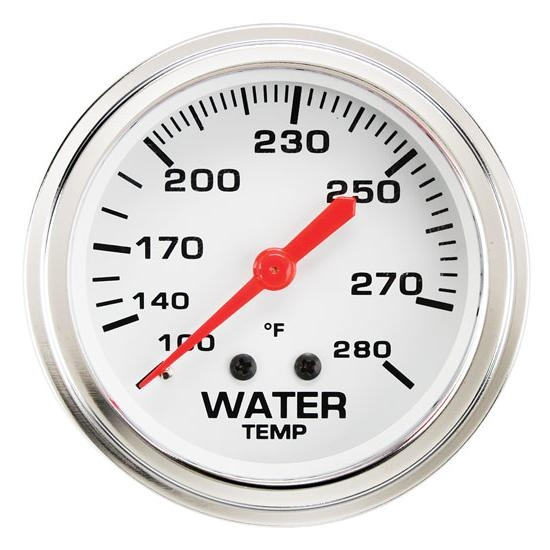


In Texas it gets hot, damn hot, as a matter of fact. As the Texas old saying goes, “Hotter than a firecracker lit on both ends!” In those blistering hot summer months every car guy wants to insure that the engine of his or her beloved classic car does not overheat destroying the engine.


The factory Tri-Five temperature gauge is very vague and has no temperature numbers on the gauge. The so called numberless panel just has a needle that swings from C to H. It’s a mistake, however, to think that this type of gauge is giving you an accurate readout of your car’s motor temperature. In fact, that middle section of the gauge, between the cold and the hot readings, can represent a wide range of temperatures for the car’s engine.  I question the reliability of the 50’s technology.  This layman believes the Tri-Five dash gauges are not a good as today's newer model aftermarket temperature gauge.
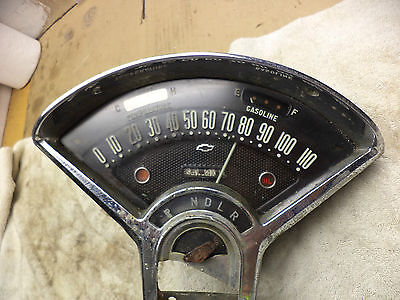


1955 Bel Air Dash Instrument Cluster
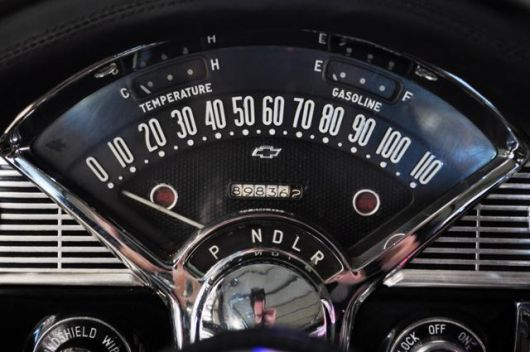
1956 Bel Air Dash Instrument Cluster
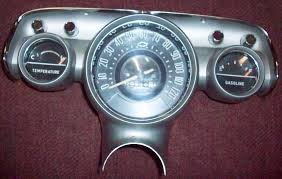

1957 Bel Air Dash Instrument Cluster


Try towing something, or even fully loading your vehicle with your large friends, and driving up a long incline.  Sure your numberless gauge might show the needle closer to H but what does that really mean? Is the H on the gauge 210 or 250 degrees.  The boiling point of water is 212 degrees, however the radiator is a pressurized system and should be filled with coolant that raises the boiling point.  
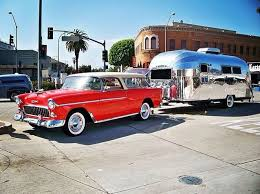


The pressure cap on a cooling system is the key to raising the boiling point of the 50/50 mix of antifreeze and water. For every pound of pressure the cap provides increases the boiling of point of the coolant mixture 3 degrees. If you had plain water in your cooling system with a 15 pound pressure cap the water would boil @ 257 degrees. If you had a 50/50 mix of antifreeze and water the coolant would boil @ 265 degrees with a 15 pound cap. The boiling point would raise to 270 degrees if you had a 60% antifreeze mixture with a 15 pound cap. If you had a 70% mixture the boiling point would raise to 276 degrees.


FYI:  A good temperature for a classic Chevy engine is usually 160 to 180 degrees. If you reach 200 when siting, but the temperature reduces when driving that is O.K.


Any car can be damaged by overheating. Overheat the engine enough and you will blow a head gasket and be in for an expensive repair. A car’s temperature gauge should accurately inform you of the coolant temperature so you may know when to make adjustments to stop the engine’s overheating.  If your engine overheats but the head gasket do not blow the high temp heat soak into the cylinder head may cool too quickly after the engine is shut down.  This rapid cooling of the heads will produce cracks between the cylinder and water jackets of the engine.
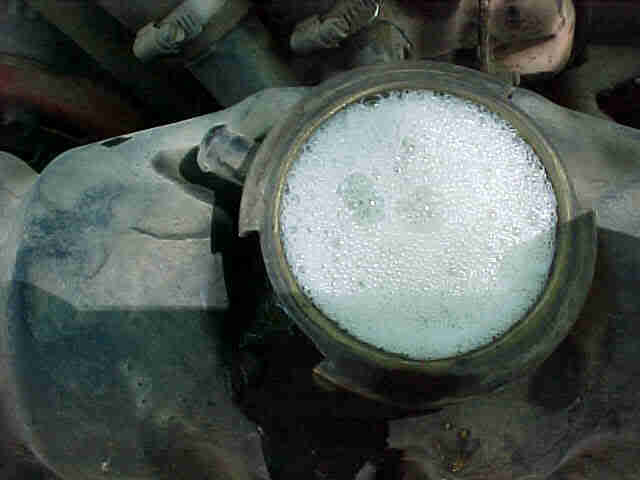
After an engine warms up and little bubbles appear in the coolant like this that indicate a blown head gasket.
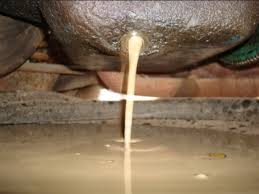
Coolant in the oil that causes your engine oil to become a milky chocolate milk which is a sure sign that there is a blown head gasket.  Other signs are if the engine is running poorly (skipping, hesitating, or lack of power). Another symptom may be excessive pressure in the crankcase causing extreme blow by out the oil cap or engine oil seals.
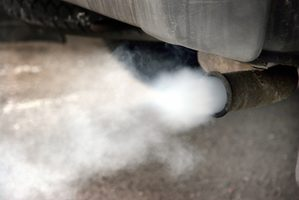

White exhaust smoke is one sure sign of a blown head gasket


I prefer to have a metered gauge for the coolant temperature on the dash, rather than a stock Tri-Five gauge or warning light.  I regularly look at the coolant temperature gauge and the voltage and oil pressure gauges while I drive. I know where the gauges’ needles should sit while driving.  If I see something abnormal I can jump on the problem straight away.
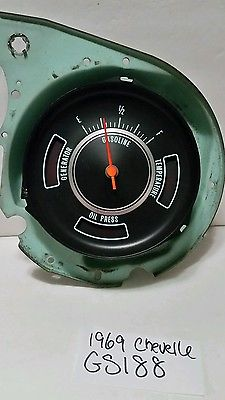

1969 Chevrolet Chevelle Malibu fuel gauge warning lights


A better coolant gauge can also indicate problems well before anything mechanically needs to be fixed. For example, in an engine where the temperature rises while travelling at highway speeds is a concern.  The gauge at speed should be reading close to temperatures shown at idle.  When is was 16 years old my 1969 Chevy Chevelle had this problem.  I found after inspection of the engine fan by wiggling it up and down that the water pump shaft could be move up and down and had worn out bearings.  The pump’s impeller was not allowed to pump enough coolant at speed to adequately cool the engine.
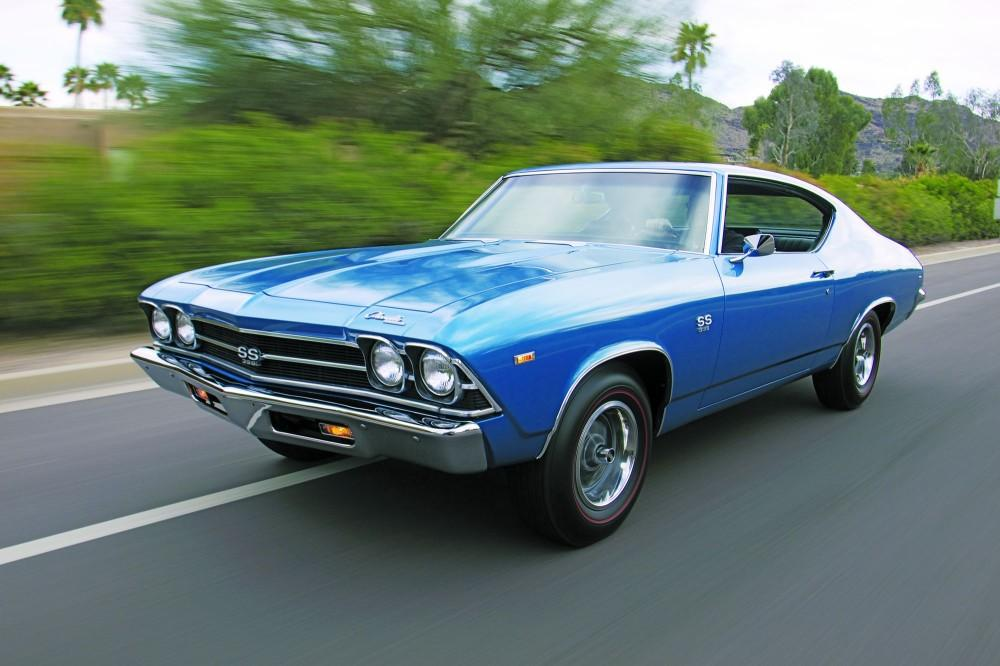

Chevelle SS 396


Later in life I owned a 1978 Chevy Corvette Pace Car. I discovered from the metered gauge that the car was running cold. This fact told me that the thermostat was stuck open. This is something that I would never have known about without a proper gauge.
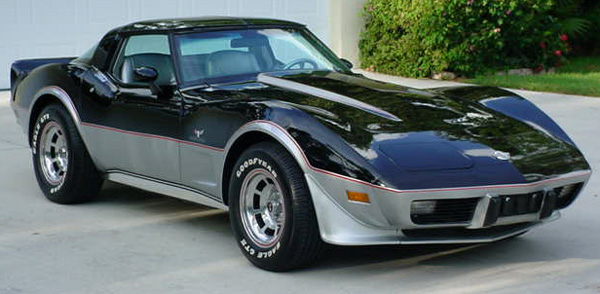

1978 Corvette Indy Pace Car


There was also the problem back in the good old days in cars with only the warning light.  If you lost the coolant out of the engine’s cooling system the light wouldn't come on, because there was no hot coolant to tell the warning light switch that it was hot.  A temperature sender just sitting inside a hot manifold with no fluid will not trigger some warning lights and older gauges may not be sensitive enough to show the problem.


Installing a Water Temperature Gauge


Water temperature gauges come two different in metering methods. You may buy a gauge that either gauges the engine temperature by electrical or mechanical means.  


Electrical Gauge

  1. When installing an electrical water gauge, a special sending unit must be installed to the engine.  Small-block Chevys have pipe plug fittings in each cylinder head and most intake manifolds.  
  2. Before starting the installation drain the the coolant before removing the plug.  
  3. A 18-gauge wire is used to create a suitable ground for the electrical gauge.
  4. Connect the sending unit to the terminal marked “S” for sender on the gauge.
  5. Connect a switched 12-volt source to the terminal marked “I” for ignition.  
  6. The wire to the engine will be routed through the fire wall.  A rubber grommet must be used to prevent chaffing.
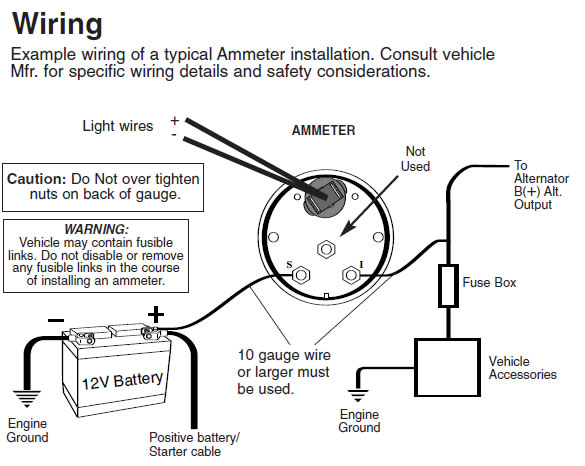

AutoMeter Water Temp Gauge Wiring Diagram
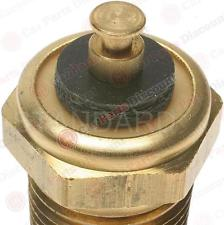

Engine Coolant Temperature Sending Unit Sender


Mechanical Gauge

  1. When installing a mechanical water gauge a special sealed tube relays engine temperature information to the gauge.
  2. The fitting will require a larger hole in the firewall to route the tube.  
  3. With mechanical temperature gauges pass the tube through the gauge panel first. a rubber grommet must be used.  If you don’t you might have hot water spraying on your feet.
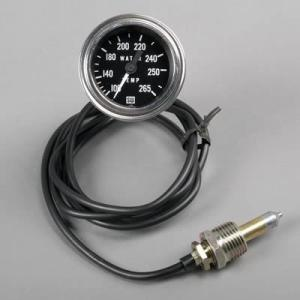

Mechanical Water Temperature Gauge - Stewart Warner Deluxe
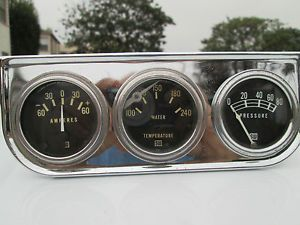

Find a good location for the gauge so that the engine water temperature is only a glance away and out of sight and out of mind.


!!!Support Texas Classic Experience!!!
Did you like the blog?  If you did, the best way to support Texas Classic Experience is to share this post!  Please tell others that you liked this post by sharing it with your car friends by sending them a link to this page.  http://texasclassicchevyexperience.blogspot.com/


Don’t forget to visit and like Texas Classic Experience on FaceBook:  LINK to FaceBook


Texas Classic Chevy Experience will post blogs about: Hot Rods, Chevy, Chevrolet, Drag Racing, Car Shows, Classic Cars, Custom Cars, Muscle Cars, How to Tech. posts, Dallas Area Classic Chevy Club, Texas Muscle Car Challenge, Tri-Five Nationals, Lone Star Chevy Convention, Classic Car lists, Classic car links, Spotters guides, Car Shows, Swap meets, Book reviews and More.

*********************
A Great Tri5 Chat Board

~~~~
*********************************************************************************************************


Tuesday, March 15, 2016

The Tri-Five Chevrolet Corvette (C-1)


The Tri-Five Chevrolet Corvette (C-1)

 -Alan Arnell


This article is about the first generation (C-I) 1955, 1956, 1957 years of the Chevrolet Corvette.


The Chevrolet Corvette during the years of the Tri-Five Chevy are called the C-1 generation. The 2016 Corvette is the seventh generation of the beloved Corvette and is called the C-7.  The Tri-five model years were a part of the first generation of the Corvette sports car produced by Chevrolet. The Corvette was first introduced late in the 1953 model year.  The C-2 generation was introduced to the car buying public in 1962.  1962 was the the first year that a Corvette was produced with a rear independent suspension.  The C1 is thus also referred to as the "solid-axle" generation.


In the beginning to keep costs down Chevrolet used off-the-shelf parts of 1949–1954 Chevrolet passenger vehicles to make the Corvette. The drivetrain and passenger compartment for the Corvette were moved rearward to achieve a 53/47 front-to-rear weight distribution and a 102-inch wheelbase. Still, even with the hand me down car parts, owners of C-I Corvettes scored the car, in user surveys, as better than the foreign sports cars they had own in their past.


Plastic-fiberglass was used for making the body of the Corvette. because Cheverolet needed to quickly make a concept car and the availability of new-better fiberglass technology.  Designers originally planned for the Corvette to have a steel body.  The body of the original show model using plastic was first displayed at the Waldorf Car Show.  


The plastic body of the concept Corvette captivated critics and car buyer alike at the Waldorf show.  That buzz about the new body material and advances in fiberglass technology sealed the use of plastic body parts for all Corvette to come.


The Corvette almost did not make it into the Tri-Five years.  Low sales and small runs of the car put the Corvette on the chopping block.  Luckily, for us Corvette lovers, three events interceded and the Corvette stayed in production to blossom into what it is today.   


In 1955 Chevrolet introduced its first V8 engine for its full size cars.  The small block revolutionized the car market. The new engine was a big factor as to why the 1955 Chevy was to become the classic it has become for the ages. The makers of the Corvette In 1955 replaced the ho hum 6-cylinder engine of previous years with the new V8. The Corvette’s new engine was a vast improvement and produced a 195 hp with 265 ci.  Coupled with a three-speed manual transmission, connected to a 3.55:1 ratio rear axle ratio, the light car became a boulevard monster.


During this time Zora Arkus-Duntov went to work at GM.  He wrote an internal memo entitled, "Thoughts Pertaining to Youth, Hot Rodders and Chevrolet".  This legendary memo laid the foundation for a new way of thinking for Chevrolet.  The new focus used the Corvette as one of the principal methods used to create a successful and profitable performance parts programs.  Arkus-Duntov became the director of high-performance vehicle design and development for Chevrolet helping him earn the nickname "Father of the Corvette”.


The Ford two-seat Thunderbird, billed as a "personal luxury car", not a sports car, introduction in 1955 helped the with the survival of the Corvette.  Chevrolet took the Thunderbird as a challenge, that it could not back down from, even if the bean counters said otherwise.


Still, the small run and sales of the Corvette kept the car during the Tri-five years to continue to be made from early 50’s chassis and suspension technology, even after the full size cars were redesigned for the 1955 model year. This was due to the combined factors of the relatively high re-engineering and re-tooling costs for the Corvette’s low production-volume.


The 1956 model came with a new body, a much better convertible top with power assist optional, real glass roll up windows (also with optional power assist), and an optional hardtop. The three-speed manual transmission became the standard transmission. The Powerglide automatic was now optional. The V8 remained at 265 cubic inches but power ranged from 210 hp to 240 hp.


Visually, the 1957 model was a twin to the 1956 Corvette. The only changes made to the new model was to a one inch piece of chrome trim around the convertible top bay. The chrome piece guides the convertible top and was also changed from a hole holder to a grooved holder to better guide the top down. The other change was the factory drilled holes in the floorboard to drain water leakage.  1956 Corvette owners complained of the top leaking rain water into the floorboards that kept the floor wet.  To solve the problem instead of fixing the leaks, engineers had the production line drill holes into the floorboards to drain the rainwater.  Small production run; small effort, I guess?


Engine displacement in 1957 was increased to 283 cu in. Fuel injection became optional. A four-speed manual transmission was available after April 9, 1957. The Rochester injection used a constant flow system that help the 283 small block produced about 290 hp.  The updated engine became one of the first mass-produced engines in history to reach 1 horse power per cubic inch.


Chevrolet went all in for high-performance and racing during the Tre-Five years.  Car buyer were blessed in 1957 with Corvettes that could be ordered ready-to-race with special options. Sadly, fuel injection was in short supply and only 1,040 Corvettes were sold with this option.  The rarest options sold in 1957 were the RPO 579E 283 hp engine with a fresh air and tachometer package, RPO 684 heavy-duty racing suspension,15" x 5.5" wheels, power windows and the coveted four-speed transmission


The Tri-Five Corvette fails in comparison to the standards of performance and handling produced by today’s Corvettes. Yet, in its day, the Tri-Five Corvette was an inventive, highly-revolutionary, high performance American two seat classic sports car.


Specifications: 1955, 1956, 1957 Corvette

Constructed in St. Louis, Missouri.
Body style-2-door convertible
Wheel base- 102 inches
Length-177.2 inches
Width- 72.8 inches
Class-Sports Car

1950s automobiles


!!!Support Texas Classic Experience!!!
Did you like the blog?  If you did, the best way to support Texas Classic Experience is to share this post!  Please tell others that you liked this post by sharing it with your car friends by sending them a link to this page.  http://texasclassicchevyexperience.blogspot.com/


Don’t forget to visit and like Texas Classic Experience on FaceBook:  LINK to FaceBook

Texas Classic Chevy Experience will post blogs about: Hot Rods, Chevy, Chevrolet, Drag Racing, Car Shows, Classic Cars, Custom Cars, Muscle Cars, How to Tech. posts, Dallas Area Classic Chevy Club, Texas Muscle Car Challenge, Tri-Five Nationals, Lone Star Chevy Convention, Classic Car lists, Classic car links, Spotters guides, Car Shows, Swap meets, Book reviews and More.

*********************
A Great Tri5 Chat Board