Showing posts with label 57 Chevy. Show all posts

Tuesday, October 4, 2016

Alan Arnell’s Classic Chevy-Classic Auto Biography

Alan Arnell’s

Classic Chevy-Classic Auto Biography


-Alan Arnell
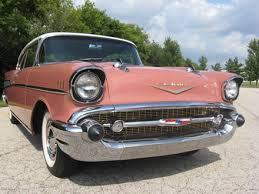

1957 Chevy Bel Air 4-door hard-top painted in Canyon Coral & India Ivory


I became interested in Hot Rods as they were called and not old enough yet to be considered classic cars, because they were just cars in 1965. Classic Car at that time were cars made before World War II, such as the '40 Ford Coupe and the '32 Deuce Coupe.

I was 7 years old in 1965.  My mother had a wonderful 1957 Chevy Bel Air 4-door hard-top painted in Canyon Coral & India Ivory with an interior color of black and silver, that I just loved. I wanted my own car to hot rod since that time.  That ideas has been the forefront of my mind to this day.  This reoccurring theme stayed true my whole life despite the changes and personas a man has to live through during his life in Middle America.  
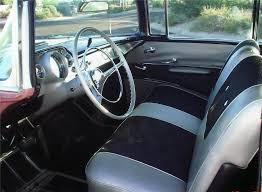

Interior Color of Black and Silver


I lived during my formative years in the late 60’s and late 70’s I lived the Mid-West, watered down version, of the 1950’s Greaser life in a suburb of Peoria, Illinois (called the Lanes) with a little flower power and anti establishment thrown into the mix and without the greasy hair.  Yes, we were always a little behind the times in the Lanes, than the the more trendy and influential parts of the USA. We more or less lived the '50s twice. (a reference to the movie Field of Dreams) Nevertheless, even in the Lanes we knew the wet head was dead!  

7851_USER_PROFILE__230x230.jpg
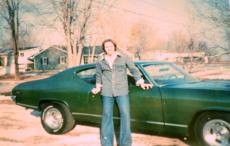
Me in 1976 with my 69 Chevelle


You might already know that Greasers are a working class youth subculture that was popularized in the late 1940s and 1950s by middle and lower class teenagers in the United States. Hot Rod Cars, Rock and roll music, and rockabilly, were major parts of the culture, and styles were influenced by singers like Elvis Presley, Carl Perkins, Chuck Berry, Little Richard, Bo Diddley, Eddie Cochran, Gene Vincent, Johnny Burnette, Vince Taylor and Ritchie Valens, but the two main figures of the look were Marlon Brando and James Dean. In the 1950s and 1960s, these youths were also known as "hoods," as in "hoodlums." This may be because the style was more popular in poor neighborhoods that had higher crime rates than upper-class neighborhoods.
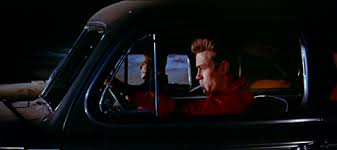

James Dean in the movie “Rebel Without a Cause”


In the 1950's, Hollywood film characters portrayed by actors such as Marlon Brando and James Dean influenced American greaser culture. American youths were looking for entertainment and identity following the war-hero image of the World War II generation. The 1950's was a boring time for many of America's youths, and the greaser became an individualistic iconic image as a role model to escape boredom. The subculture also featured deviant social behavior influenced by the way films portrayed greasers.  Dean represented greaser culture in the 1955 film Rebel Without a Cause, in which his character is an outcast trying to fit in with his peers while wearing a red windbreaker jacket. This reinforced the notion of individualism even within the social boundaries of greaser culture. Dean epitomized youths' search for identity during the 1950s. Dean's untimely and reckless death made the leather jacket that he frequently wore, even more symbolic of the rebellious greaser seeking adventure.


Individualism or hoodlumism?
The Tri-Five Chevy played a great roll in my emerging love of fast hot rod cars.  In 1965 you could buy a 55 for $200 and spend $50 a week made from you part time job, pumping gas for example, and with your buddies in your dad’s garage in a couple months time have a cool life changing car at your disposal.  For nearly all of the first century of automobile travel, getting your license meant liberation from parental control, a passport to the open road.  


Make it or Break it, Find it or Grind it, Fix your own crap man!


Cars of the late ‘50’s and early 60’s were not as reliable as autos of today.  Teens had to work on their cars and therefore had a intimate connection to the mechanics of the vehicle.  My friend Carl spent so much time bent over his 1962 Chevy II, I thought he would be permanently bent over that way for the rest of his life.  I tore out so many transmissions in my 1969 Malibu-Chevelle that my best friend Ron used to say,  “I believe we will find Alan a sleep under that car some morning.”
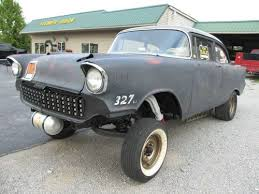


Too Cool for School!

Some-what like army buddies in a fox hole, working and maintaining hot rod was a bonding activity. Therefore, adversary and strife as well as over overcoming that hardships builds a pride and friendship that is rarely matched by less stressful experiences.  Thus, was the heap of crap most of us drove, at least where I grew up.  We did not buy a car for reliability and transportation.  No, we bought a car for the potential of making a self customized-hot rod that was an expression of your own personal character that was eagerly perceived by others in your age group.
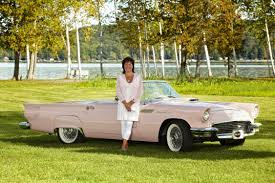

Rich kids-Bogus-Bad Vibes.


Oh! We had rich kids who’s parents bought them the brand new Thunderbird.  Yet, they were looked down upon by their peers as not as cool, because they did not build their personal chariot by themselves. If you could build an engine that was faster than the next guy, or paint a custom paint job in your garage you were looked upon as a man among men.  


I read an article in the Washington Post that quotes Matt Crawford, a political philosopher at the University of Virginia’s Institute for Advanced Studies in Culture who also fabricates components for custom motorcycles.  He said:


“Digital enticements are displacing the pleasures of driving,  So that whole sense of getting in the car and finding out what’s beyond the next town is less powerful.”


Crawford, 49, fell in love with cars back when drivers often had to deal with mechanical problems. His first few cars were “real beaters” that broke down frequently, requiring him to bang on a stranger’s door and beg for help. “You’d end up interacting with people you wouldn’t otherwise meet,” he says. And knowing your car paid dividends. Braking was a skill. Parking did not involve cameras or computers.


Now, he says, “cars have become virtual reality boxes,” infantilizing the driver. BMW even pipes phony engine noises through its cars’ sound systems to make drivers feel like they’re in charge of a machine that mostly runs itself. Driving these days, Crawford writes, “would seem to promote a kind of regression — back into the womb.”


Maybe car culture is waning, he suggests, because “parents are less authoritarian and want to be your friend.” In other words, the need to rebel isn’t what it used to be."

~A Strong web 1.jpg
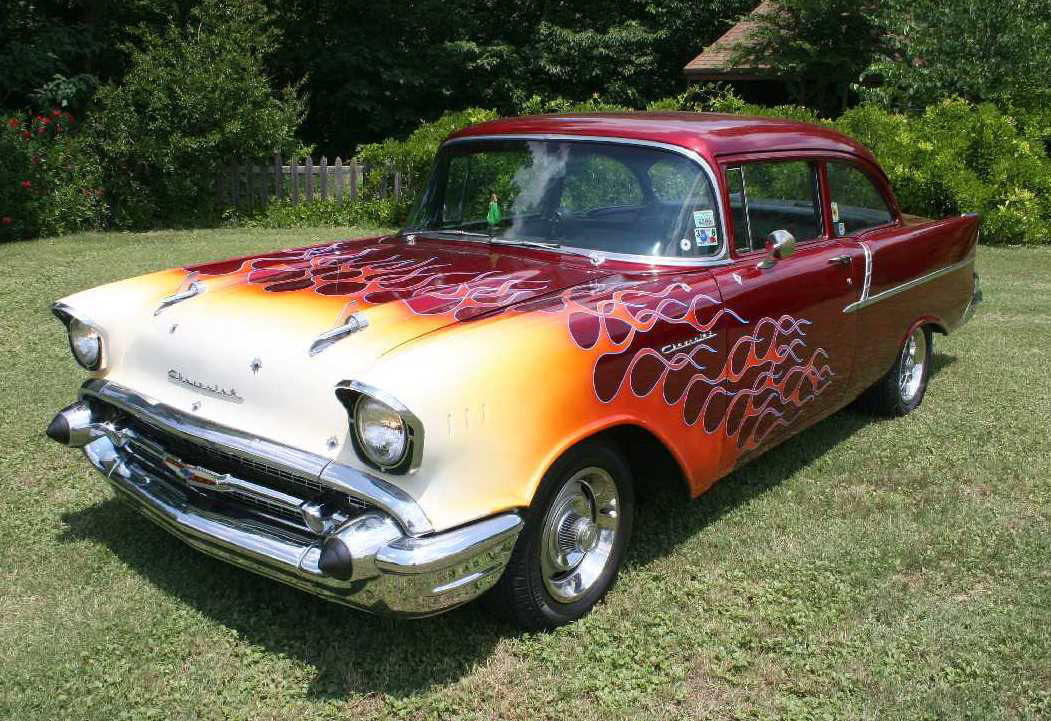
Candy the Apple 1957 Chevy-AKA The Hell Bitch
I shall now segway into my Hot Rod autobiography.  Instead of rewriting the same thing over again, I wish to use what I wrote when my Hod Rodded, candy apple red, with painted flames, 1957 Chevy 150 2-door sedan was featured on  www.dallasclassicchevy.com the Dallas Area Classic Chevy’s home Web Page.


I, like many other car enthusiasts, have always remembered which cars made us excited and car crazy during childhood.  As you can guess, the start of my obsession with cars began with a 1957 Chevy.  I grew up in a coral pink, 4 door hardtop 1957 Chevrolet Bel Air that my parents had from 1958 to 1972.



I can remember being 5 years old and saying “Put it into passing gear, Mama!”  She would floor it and kick in the 4-barrel.  To make it even better, we lived in Illinois where rust is a real problem, especially with the exhaust system.  My Dad, a product of growing up during the Depression-era, would buy the least expensive mufflers, which were called, in those days, “Glasspacks”, which made the 283’s roar a very pleasing tune to my ears.  Sadly, even though there was no body rust and the car looked brand new, my father sold it when I was 14 for $150 to buy a truck camper.  Back then, in his view, it was just an old car.


When I became interested in cars in 1963, there were several kids that were 10 or more years older than me in the neighborhood that were Hot Rodding '57 Chevys. I used to watch them tearing around the neighborhood in their '57’s with reverse chrome wheels and no front bumper.  I was so enamored I even made a plastic model of what my '57 would look like if I had one.  Of course it had no front bumper, was painted yellow, with an off centered racing stripe and multiple “STP” and Moon stickers. Forty two years later, I still have that model.

';lkjhy.JPG
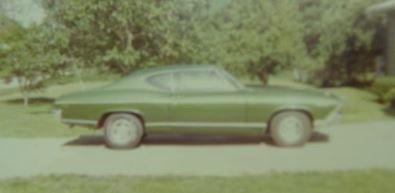
My first car and hot rod I fixed up, a 1969 Chevelle-Malibu 


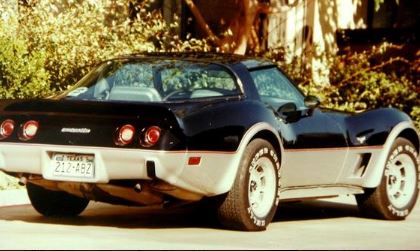
By the time I turned 16 in 1974, most of the Tri-Fives in Illinois were pretty much rusted hulks.  So I purchased a 1969 Chevelle.  I drove the Chevelle throughout high school and college.  When I was 25 in 1983, I went the Corvette route buying a 1978 pace car.  I owned the Vette until 1988 when my first child was born.

nnndsnsn.JPG
My 1978 Corvette Pace Car


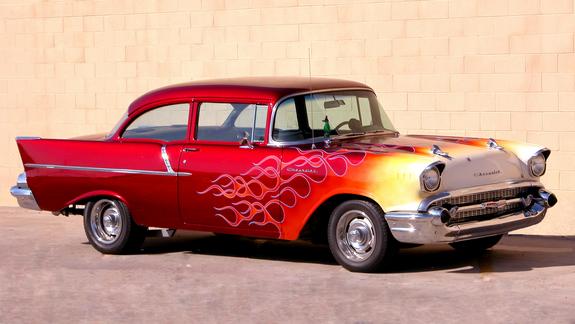
Fast forward to 2000 and once again that strong desire to have a hot rod came over me.  I didn’t want to ride the same path again with a muscle car or a Vette so, I set my sights on my first car love and lust, a 1957 Chevy.  When I started looking for a '57, of course I wanted a Bel Air hardtop coupe.  I looked in magazines and the newspapers and had no success with that search.  As luck would have it, in The Colony, Texas where I live there is a classic auto dealer called Pat’s Auto Sales.  I had been going there for years just to look at the cars, as if it were my own little car show.  One night I found a dark blue 2 door Bel Air hardtop.  I thought about it for a couple of weeks and when I decided to buy the car it had a sold sign on it.  Well, I moped around for a day or so and called Pat and said, “If for some reason the sale on the blue '57 doesn’t go through, give me a call because I’m interested.”  Pat replied, “I am getting in a yellow and orange flamed candy apple red 57 today for a trade in so why don’t you come on down and have a look?”  Candy apple red, I thought, “I’ve always wanted a candy apple red car.”

5115180108_large.jpg
1957 Chevy 150 2-door Sedan


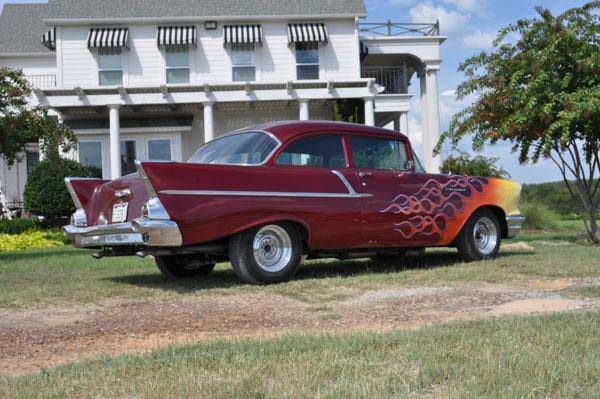
I went down to have a look and when I arrived at the car lot I immediately liked the flames and the red paint, but it was a post sedan and then I blurted, “What is wrong with the side of that thing?”  Pat told me, “This car is a One-Fifty.  She doesn’t have the stainless diamonds on the side like the Bel Air or the painted diamonds like the 210.  The chrome trim on the side looks somewhat like a 55 Chevy 210.”

~~~small Hell bitch.jpg


I had never seen a car like that before and a One-Fifty was not what I wanted.  Even though I went for a test drive and even liked the look of the car’s paint, I passed on buying that day.  So, you could say it was not love at first sight.  I went home that night with the intention of continuing my search but I started thinking. I love the flames. I love the candy apple red paint. I love the price. And do I really need a Bel Air?  With that much needed spark and my wife’s two cents, “Oh, I like that red car much better than the blue one!” the car started growing on me more and more to the point that the next day I went back to Pat’s and plopped down my money and drove her home.


I didn’t do any restoration work on her for a year or more. I just wanted to enjoy driving her every chance I got.

Here is a link to my Dallas Classic Chevy Club Featured Car.

Now in July, 2016 my main thoughts have not really changed since was that toe-headed 7 year old boy in the Lanes in 1965.  Even after getting more educational degrees than a thermometer and more chins than a Chinese laundry establishment, 36 years of marriage, raising 2 children, 35 years working in public education, I still want the same basic things for my hobbies. Guitars and Hot Rod Cars!   To quote Billy Gibbons Rock of the famous rock band ZZ Top, “Everyone knows cars and guitars go together like tortilla chips and guacamole.”  I like chips and that green slime is sooo goooooood!


!!!Support Texas Classic Experience!!!
Did you like the blog?  If you did, the best way to support Texas Classic Experience is to share this post!  Please tell others that you liked this post by sharing it with your car friends by sending them a link to this page.  http://texasclassicchevyexperience.blogspot.com/

Don’t forget to visit and like Texas Classic Experience on FaceBook:  LINK to FaceBook
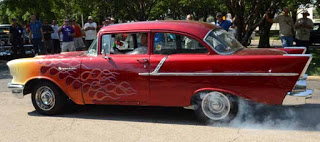
My winning Peel Out at the 2011 Lone Star Classic Convention in Dallas

Texas Classic Chevy Experience will post blogs about: Hot Rods, Chevy, Chevrolet, Drag Racing, Car Shows, Classic Cars, Custom Cars, Muscle Cars, How to Tech. posts, Dallas Area Classic Chevy Club, Texas Muscle Car Challenge, Tri-Five Nationals, Lone Star Chevy Convention, Classic Car lists, Classic car links, Spotters guides, Car Shows, Swap meets, Book reviews and More.

*********************
A Great Tri5 Chat Board

Slammin’


Tuesday, July 12, 2016

Alan's Favorite American Cars Of All Time

Alan's Top 10 Picks For Favorite
 American Cars Of All Time

-Alan Arnell

10. 1968 Mustang Fastback


1968 Mustang Fastback

The 1968 model year Mustang was the second year of the first redesign of the original model. Even though the father of the Mustang Lee Iaccoca later complained about the Mustang's growth in over-all size, he did oversee the redesign for 1967. The major mechanical feature and thus the size growth to allow the installation of a big-block V8 engine. The new model sported concave taillights and chrome side ornamentation, square rear-view mirrors, and usual yearly wheel and gas cap changes. The high-performance 289 option was placed behind the newer 335 hp 390 cu in FE engine from the Ford Thunderbird, which was equipped with a four-barrel carburetor. A 390 GT engine, and a 4-speed manual transmission recorded quarter mile times of approximately 13 seconds and trap speeds of over 105 mph. During the mid-1968 model year, a drag racer for the street could be ordered with the optional 428 cu in Cobra Jet engine which was officially rated at 335 hp all of these Mustangs were issued R codes on their VIN#'s.


 9. 1955 Thunderbird


1955 Thunder Bird

The 1955 Ford Thunderbird was the first 2-seat Ford since 1938. The Thunderbird was developed in response to the 1953 showing of the the Chevrolet Corvette at Motorama in New York Auto Show. The Corvette in turn was developed in response to the popularity of European sports cars among Americans.

Ford created a completely new market segment around the Thunderbird, the personal luxury car. While a light weight car with a large V8 engine, the Thunderbird focused more on driver comfort than speed. The Thunderbird was not a direct rival to the European sports cars imported into the United States.

As standard, the 1955 Ford Thunderbird included a removable fiberglass top; a fabric convertible top was an option, although commonly specified. The engine was a 292 Y-block V8. The car had fender skirts. The exhaust pipes exited through twin bumper guards, which are bolted to the rear bumper.

The frame was basically a cut-down version of the standard Ford Body-on-frame design with a 102-inch wheelbase identical to that of the Corvette, and a pre-existing 292-cubic-inch OHV V8. 

The Thunderbird was produced with a Fordomatic automatic or manual overdrive transmissions, and featured four-way powered seats and push button interior door handles. Other unique features were a telescoping steering wheel and a tachometer.
Equipped with a V8 engine, the Thunderbird could hit 110-120 mph. It was a smaller two-seat "personal luxury car", compared to many other much larger cars that were on the road in the 1950s. It was designed to be a brisk luxury tourer, and not a sports car.

8. 1932 Ford Coupe V8 (Deuce Coupe)


1932 Ford Coupe V8 (Deuce Coupe)
What I really Like!!!

During the period after WWII, the '32 Deuce Coupe was an ideal hot rod. Rodders' would strip weight off the much available car and hop up the engine.  This continued into the 1960s on a large scale, as noted in the hit song and as the pivotal street racing car in the film "American Graffiti". Today, the roadster and coupe are the most sought after body styles, as these were popular for street rods and hotrods; unmodified examples have become rare. 

   The '32 came in two body styles, the more common 5-window and rarer suicide door 3-window. After World War II, the iconic stature of the 1932-vintage Ford in hot rodding inspired The Beach Boys to not only write a song entitled "Little Deuce Coupe" in 1963, but also had one of their albums named for the car, from the aforementioned song.

 7. 1951 Custom Mercury


Image result for 1951 ford mercury
This '51 Merc was customized over 60 years ago by Sam Barris.  Sam artfully chopped the top of his nearly new 1949 Mercury, he initiated a restyling trend that shows no signs of stopping today. Almost overnight, as several more hammered coupes emerged, Barris’ radically chopped and lowered Mercury became the poster child for the burgeoning custom-car movement.

For 1951, Ford Motor Company stylists extended the rear fenders on the basic ’49 to ’50 Mercury body shell, endowing the newer model with a longer and more distinctive profile. Customizes immediately gravitated to this updated canvas.  Many 1951 Custom Mercurys combines the best elements of 1950s-era customizing.

Rodders have routinely made cool body modifications such as a top chopped by two inches in the front and three in the rear, plus an additional inch at the crown. Other mods were to angle the B-pillars and a circa-1950 rear window. Frenched headlights were the norm along with ’54 Merc rings, the molded-in grille often using a ’53 DeSoto teeth.  Customizers liked to round the front and rear hood corners and a reshaped ’53 DeSoto front bumper. Most cars had the doors smoothed, leaving beautiful and graceful fade-away fender lines. Other details could be rounded door corners, molded quarter-panels, and flush-fitting rear fender skirts.

 6. 1959 Cadillac Eldorado Convertible

1959 Cadillac Eldorado Convertible

The 1959 Cadillac is remembered for its huge sharp tailfins with dual bullet tail lights, jewel-like grille patterns and matching deck lid beauty panels. All Eldorados were characterized by a three-deck, jeweled, rear grille insert. The Seville and Biarritz models had the Eldorado name spelled out behind the front wheel opening and featured broad, full-length body sill highlights that curved over the rear fender profile and back along the upper beltline region. Engine output was an even 345 hp from the 390 cu in engine. Standard equipment included power brakes, power steering, automatic transmission, back-up lamps, windshield wipers, two-speed wipers, wheel discs, outside rear-view mirror, vanity mirror, oil filter, power windows, six way power seats, heater, fog lamps, remote control deck lid, radio and antenna with rear speaker, power vent windows, air suspension, electric door locks and license frames. The Eldorado Brougham also came with Air conditioning, automatic headlight dimmer, a cruise control standard over the Seville and Biarritz trim lines.

 5. 1935 Duesenberg Model SJ Convertible Coupe


1935 Duesenberg Model SJ Convertible Coupe

Clark Gable's 1935 Duesenberg roadster.
The car above is the same car in 2016.

The Duesenberg Model J is a luxury automobile made by Duesenberg. Intended to compete with the most luxurious and powerful cars in the world, it was introduced in 1928, the year before the stock market crash that led to the Great Depression. The Model J, available with a supercharger after 1932, was sold until 1937.

Most Model Js were sold as a bare chassis to be fitted with an interior and body by a third party. Such artisans included coachbuilders LeBaron, Murphy and Derham with Rollston and LaGrande bodying later cars. Gordon M. Buehrig became the chief designer at Duesenberg and standardized the Duesenberg design language. His work included designing standard hoods, lights, radiators and bumpers. Duesenberg often ordered several bodies from a coachbuilder, and sold complete cars.


As the technical highlight of the Model J, the engine was one of Duesenberg’s, and America’s, best . When Fred Duesenberg started the Model J project, he used developments learnt with the successful Indianapolis cars including engine refinements such as four valves per cylinder and twin camshafts. Fred’s engine was far more powerful than any passenger car unit built in America, with little roads that could satisfy the cars 265 horse power. In fact, the closest rival engine to Duesenberg’s was the 115 horse power Pierce Arrow unit.

It should be noted that the power figure of the Model J was based off a factory experimental car which was timed to offer a decent amount of peak horsepower. Most of the chassis received a conservative timing favoring low end toque and engine reliability. For most applications the Model J was a 205 to 210 horsepower vehicle with an impressive torque output of 335 ft lbs (454nm) at low 500 rpm! More specifics on the output can be found in Robert Dearborn’s Technical Ramblings found in the 1953 May Road & Track.
Introduced in 1932, a supercharged variant of the Model J was offered called the SJ. This forced induction version raised power to 320 horses and increased the 116 mph top speed to 129 mph. The supercharger itself offered eight psi of boost @ 4000 rpm. Because the supercharger sat in the way of the exhaust manifold, all supercharged cars featured the well distinguished external exhaust system. This exhaust system featured chromium flex-pipe headers which could be ordered as an option on the standard Model J for $927 USD.

Both the chassis and suspension were quite conventional in design. Two deep pressed chassis side members, measuring eight inches tall, were sufficient to support any custom coachwork that would adorn it.

Special attention was paid to the handling and braking of the Model J. Specifically, the spring rates were equalized to provide a smooth ride and hydraulic assistance on the braking made stopping an ease. A knob on the dashboard could modify the level of assistance based on dry, rain, snow or ice conditions. For the period, these featured were remarkable technology.

 4. Dodge Viper (Any model year)


Image result for Dodge Viper
Dodge Viper 


The first Viper prototype was tested in January 1989. It debuted in 1991 with two pre-production models as the pace car for the Indianapolis 500 when Dodge was forced to substitute it in place of the Japanese-built Dodge Stealth because of complaints from the United Auto Workers, and went on sale in January 1992 as the RT/10 Roadster.

The centerpiece of the car was its engine. The Lamborghini Company, then owned by Chrysler Corporation, designed the V10 for the Viper by recasting the block and heads in an aluminum alloy, and was based on the Chrysler LA V8 engine. A major contributor to the Viper since the beginning was Dick Winkles, the chief power engineer, who had spent time in Italy.

The engine weighs 711 lbs and produces 400 bhp at 4600 rpm and 465 lb·ft at 3600 rpm, and thanks to the long-gearing allowed by the engine, provides fuel economy at 12 mpg in the city and 20 mpg-highway.  The body is a tubular steel frame with resin transfer molding (RTM) fiberglass panels. It has a curb weight of 3,284 lb and lacks modern driver aids such as traction control and anti-lock brakes. It completes a quarter mile in 12.6 seconds and has a maximum speed of over 150 mph. Its large tires allow the car to average close to one lateral g in corners. However, the car proves tricky to drive at high speeds, particularly for the unskilled.

Performance
0-60 mph: 4.5 sec 
0-100 mph: 9.2 sec
quarter mile: 12.9 sec @ 113.8 mph
top speed: 165 mph (266 km/h) reference: http://www.vipercentral.com/specifications/
700 ft (210 m) slalom: over 66 mph 
skid-pad average g: 0.96

 3. 1967 Corvette-427


67 Corvette 427.jpg
1967 Corvette-427

The 1967 Corvette Sting Ray was the last Corvette of the second generation, and five years of refinements made it the best of the line. Although it was meant to be a redesign year, its intended successor the C3 was found to have some undesirable aerodynamic traits. Duntov demanded more time in the wind tunnel to devise fixes before it went into production.
Changes were again modest: Five smaller front fender vents replaced the three larger ones, and flat-finish rockers sans ribbing conferred a lower, less chunky appearance. New was a single backup light, mounted above the license plate. The previous models' wheel covers gave way to slotted six-inch Rally wheels with chrome beauty rings and lug nuts concealed behind chrome caps. Interior alterations were modest and included revised upholstery, and the handbrake moved from beneath the dash to between the seats. The convertible's optional hardtop was offered with a black vinyl cover, which was a fad among all cars at the time. The 427 was available with a Holley triple two-barrel carburetor arrangement, which the factory called Tri-Power. The ultimate Corvette engine for 1967 was coded L88, even wilder than the L89, and was as close to a pure racing engine as Chevy had ever offered in regular production. Besides the lightweight heads and bigger ports, it came with an even hotter camshaft, stratospheric 12.5:1 compression, an aluminum radiator, small-diameter flywheel, and a single huge Holley four-barrel carburetor. Although the factory advertised L88 rating was 430 bhp at 4600 rpm, the true rating was said to be about 560 bhp at 6400 rpm. The very high compression ratio required 103-octane racing fuel, which was available only at select service stations. Clearly this was not an engine for the casual motorist. When the L88 was ordered, Chevy made several individual options mandatory, including Positraction, the transistorized ignition, heavy-duty suspension, and power brakes, as well as RPO C48, which deleted the normal radio and heater to cut down on weight and discourage the car's use on the street. As costly as it was powerful - at an additional $1,500 over the base $4,240.75 price - the L88 engine and required options were sold to a mere 20 buyers that year. 


 2. 1935 Auburn 851 Speedster

Image result for 1935 Auburn 851 Speedster


1935 Auburn 851 Speedster
Auburn gained notoriety by employing imaginative designers such as Alan Leamy — chief designer of the 1933 Auburn Speedster, and Gordon Buehrig, who modified leftover bodies to produce the 1935 851 Speedster and modified the four-door, Cord built cars such as the Duesenberg Model J (1928–37), the Auburn Speedster (1935-7), and the Cord 810/812 (1936-7) that became famous for their advanced engineering as well as their striking appearance. The Auburn Boattail Speedster was powered by a 4.6L straight eight that, with the popular supercharger option(150 hp), could top 100 mph making it a popular model in the Hollywood market.

The Depression, coupled with Cord's stock manipulations, spelled the end of the company and production ceased in 1937. The company's art deco headquarters in Auburn now houses the Auburn Cord Duesenberg Automobile Museum and became a National Historic Landmark in 2005. The Auburn Automobile Company also had a manufacturing plant in Connersville, Indiana, formerly owned by the Lexington Motor Company.

 1. 1957 Chevrolet


1957 Chevrolet
The 1957 Chevrolet is a car which was introduced by Chevrolet in September 1956 for the 1957 model year. It was available in three series models: the upscale Bel Air, the mid-range "two-ten", and the "one-fifty". A two-door station wagon, the Nomad was produced as a Bel Air model. An upscale trim option called the "Delray" was available for two-ten 2-door sedans. It is a popular and sought after classic car. These vehicles are often restored to their original condition and sometimes modified. The car's image has been frequently used in toys, graphics, music, movies and television. The '57 Chevy, as it is often known, is an auto icon.

For more about my first love, the 1957 Chevy, just click on the link below to read several previous Texas Classic Chevy Experience's Blog Posts that are placed together for you in a compilation.


Don’t forget to visit and like Texas Classic Experience on FaceBook:  LINK to FaceBook
My winning Peel Out at the 2011 Lone Star Classic Convention in Dallas

Texas Classic Chevy Experience will post blogs about: Hot Rods, Chevy, Chevrolet, Drag Racing, Car Shows, Classic Cars, Custom Cars, Muscle Cars, How to Tech. posts, Dallas Area Classic Chevy Club, Texas Muscle Car Challenge, Tri-Five Nationals, Lone Star Chevy Convention, Classic Car lists, Classic car links, Spotters guides, Car Shows, Swap meets, Book reviews and More.

LINK to where it all began at post number 1, " Texas Classic Chevy Experience-The Beginning"